
| IN BRIEF |
|
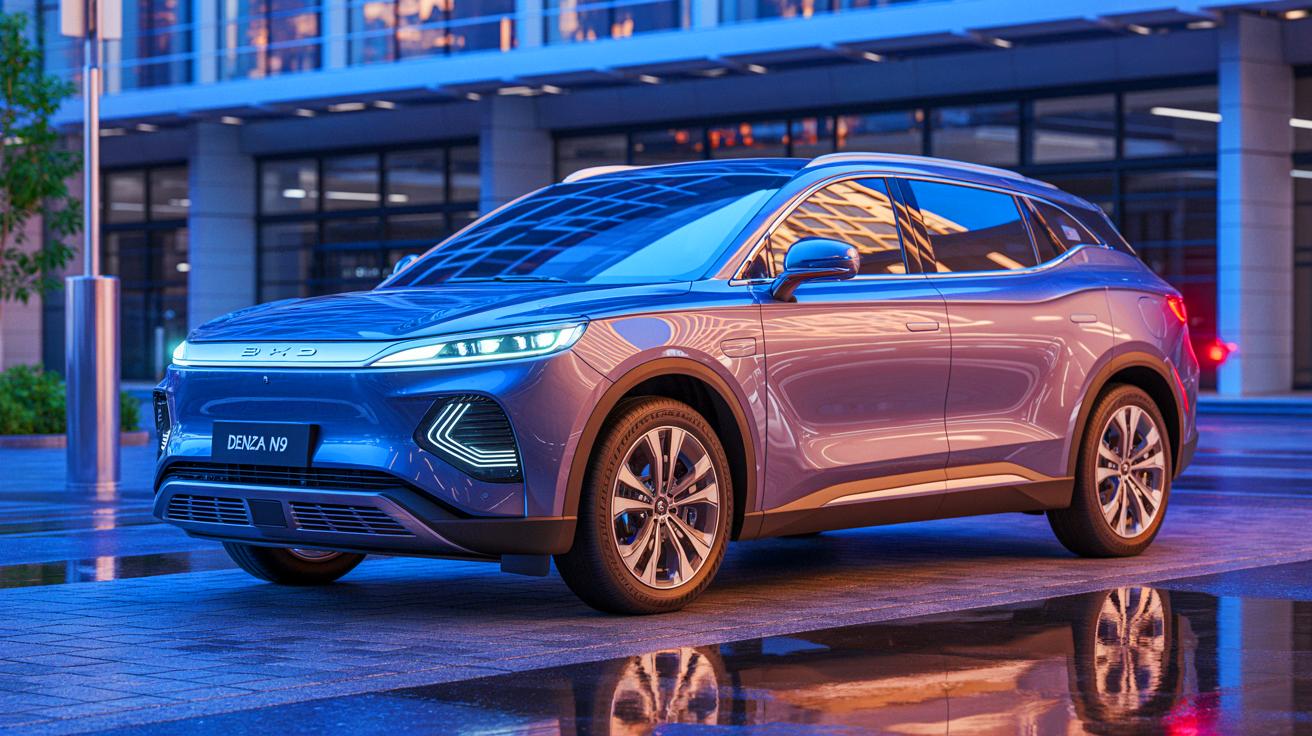
The global automotive market is rapidly evolving, and China is at the forefront. With giants like BYD redefining the landscape, electric vehicles (EVs) are becoming not only an ecological necessity but also a symbol of prestige. The latest model, Denza N9 , from BYD, equipped with cutting-edge technologies and impressive range, exemplifies this trend. Targeted at luxury consumers, this vehicle promises to compete with established European brands while potentially surpassing them in technology and performance.
The Denza N9: A Technological Marvel
The newly launched Denza N9 from BYD is a true marvel of technology. It comes equipped with the God’s Eye autonomous driving system developed by BYD along with onboard drone technology, pushing innovation to unprecedented levels. Under the hood, the N9 is powered by a 2.0T engine producing 152 kW (204 hp) and 325 Nm of torque, paired with blade-type batteries of 46.9 kWh . This setup allows for a purely electric range of 202 km and a total range of 1,302 km according to CLTC standards.
In terms of performance, the N9 accelerates from 0 to 100 km/h in just 3.9 seconds , showcasing the power of electric motors. Additionally, its fast-charging capability enables it to charge from 30% to 80% in just 19 minutes , emphasizing BYD’s commitment to providing practical and effective solutions for modern drivers.
BYD’s Ambitions in the Luxury Segment
Entering the luxury segment, BYD is not just aiming to capture market share but also to showcase its expertise in cutting-edge technology. The company’s president and founder, Wang Chuanfu , has emphasized China’s ambition to establish itself as a major player in the luxury electric vehicle market. With approximately 3.84 million plug-in hybrids and EVs sold last year, BYD holds a 20% share of the global EV market.
This success reflects not only the quality of their vehicles but also BYD’s strategic approach to position itself in a market dominated by brands like BMW and Mercedes-Benz . Continuous innovation, as demonstrated by the launch of the N9, is at the core of this strategy.
The Rise of Chinese Brands in the EV Sector
The automotive landscape in China is swiftly changing, with local brands like BYD, Li Auto , and Xpeng challenging global giants. Electric vehicles in China are gradually replacing internal combustion engine cars , thanks to high-performance batteries and advanced autonomous driving technologies.
Sales data reveals a significant impact on international brands: Mercedes-Benz reported a 6.7% decline in sales, BMW a 13.4% drop , and Audi a 9% fall . By entering the premium segment, Chinese brands are striving to climb the value chain and capture higher margins, posing an increasing challenge to established luxury brands.
BYD and the Race for Innovation
BYD is not only competing with traditional luxury brands but also challenging Tesla with the launch of its BEV platform and ultra-fast charging technology. This new platform, called the BYD Super e-Platform , aims to provide charging capabilities far exceeding current standards, including those of Tesla’s Superchargers. With an announced charging power of 1,000 kW , BYD demonstrates its capacity to push the boundaries of innovation in the EV field.
This strategic move shows that BYD is not merely a manufacturer of electric vehicles, but a pioneer in automotive technology and innovation. The question remains: how will other manufacturers respond to these bold advances, and how will the global electric vehicle market evolve in light of these innovations?
The author leveraged artificial intelligence to enhance this article, providing a well-rounded view of BYD’s revolutionary impact on the automotive industry.