
| IN BRIEF |
|
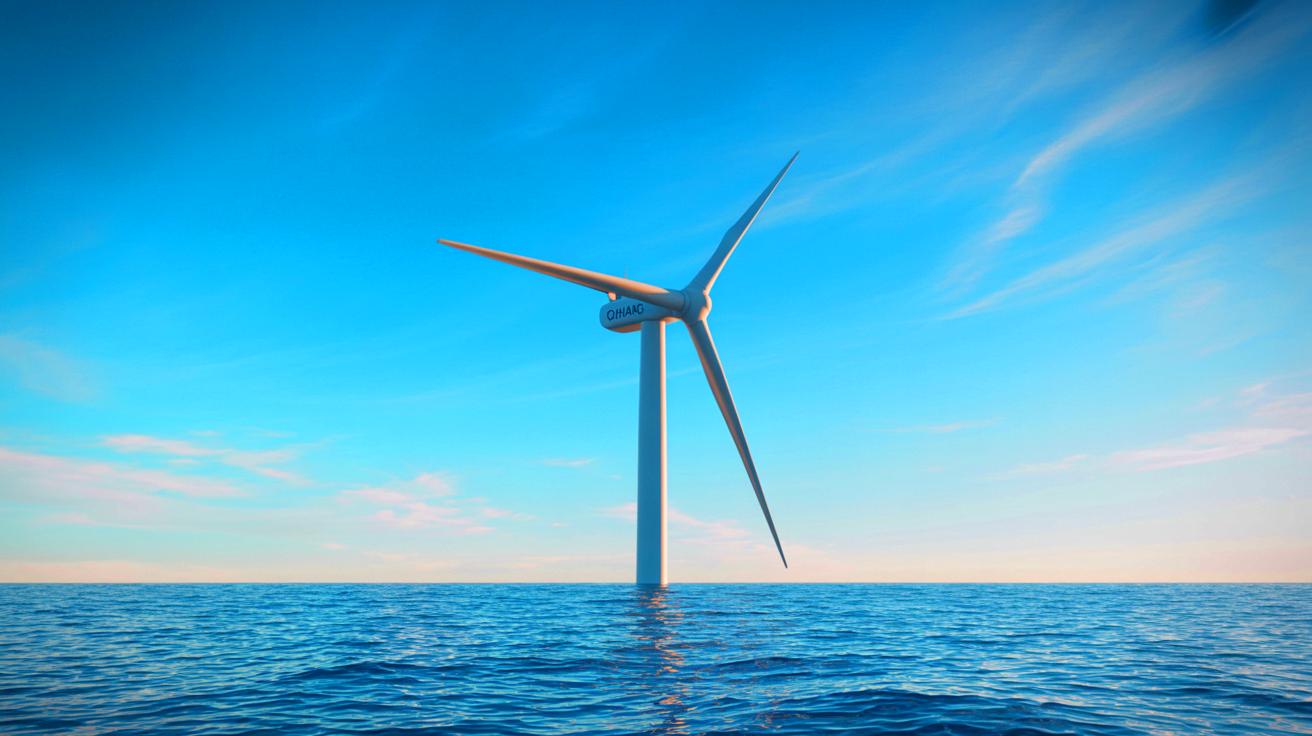
The global energy transition is taking on a new dimension with the emergence of innovative and sustainable solutions . One notable development is the world’s largest floating wind turbine, named “Qihang,” designed by the China Railway Construction Corporation (CRRC). With a capacity of 20 MW , this technological marvel can save approximately 25,000 tons of coal and reduce 62,000 tons of carbon emissions each year. This breakthrough marks a turning point in the exploration of ultra-large offshore wind turbines , focusing not only on power but also on innovation , efficiency , and sustainability —key elements shaping the energy landscape of tomorrow.
Astonishing Technological Achievement
The design and implementation of the “Qihang” turbine represent an impressive technological leap in the renewable energy sector. Independently developed by CRRC , this 20 MW offshore floating wind turbine stands out for its size and capacity. With a rotor diameter reaching 260 meters , equivalent to seven football fields, it sets new standards for size and power. The 150-meter hub further accentuates its imposing stature, solidifying its status as the largest floating wind turbine in the world.
This turbine is not only gigantic in size but also exceptional in its performance. The massive blades of “Qihang” can rotate at speeds comparable to high-speed trains. A single rotation of these blades can meet the electricity needs of a household for 2 to 4 days , highlighting the energy efficiency of this technology. This level of performance allows meeting ambitious environmental goals by conserving fossil resources and significantly reducing CO2 emissions .
In comparison, prototypes of 16.7 MW by Envision Energy and 18 MW by Dongfang Electric, which began testing in 2024 , fall short against “Qihang.” Even the Mingyang Tiancheng at 16.6 MW , known for its unique “V” configuration, cannot compete with this new entrant. This technological race positions China at the forefront of the offshore wind sector, further strengthening its status as a global leader.
Challenges in Construction and Transport
The construction and transport of the “Qihang” turbine posed significant logistical and technical challenges. The unit was built at Sheyang’s factory in Jiangsu province in October 2024 . Once completed, the wind turbine was transported from Sheyang Port to Guangli Port in Dongying, requiring a self-propelled modular transport unit . This complex procedure ensured the structural integrity of the turbine while securing safe transit to the Shandong Dongying testing and certification facility .
On January 11 , the turbine was installed in its testing position, marking the beginning of a new phase in its development. This stage is crucial for validating the turbine’s performance in a dynamic maritime environment. Engineers had to overcome various obstacles to ensure the stability of “Qihang,” implementing advanced control technologies and typhoon-resistance strategies. These innovations guarantee exceptional stability and minimal operational sway, even under extreme weather conditions.
Environmental and Energy Impact
The environmental impact of “Qihang” is substantial, both in its capacity to reduce carbon emissions and its contribution to the global energy transition. By saving approximately 25,000 tons of coal annually, this wind turbine significantly helps decrease reliance on fossil fuels—an essential goal in combating climate change. Additionally, the reduction of 62,000 tons of CO2 per year represents a major stride towards a more sustainable future.
The development of “Qihang” aligns with a broader strategy by China to dominate the offshore wind sector. Having already surpassed the United Kingdom as the largest installed base, China is positioning itself to extend its influence in the international market, particularly in Europe. This ambition is supported by continued investments in research and development , aiming to create ever more powerful and efficient energy solutions.
Moreover, “Qihang’s” potential to contribute to clean energy production brings significant economic benefits. By reducing costs associated with fossil fuel imports and creating new job opportunities in the renewable energy sector, this wind turbine represents a considerable asset for the Chinese economy. “Qihang” thus symbolizes a step towards a more resilient and sustainable economic and energy model.
Innovation and Cutting-Edge Technology
“Qihang” incorporates state-of-the-art technologies that provide exceptional performance and adaptability to marine conditions. Equipped with over 200 testing points covering every critical aspect of the turbine—from blades to transmission chains, towers, floats, and mooring systems—these points gather data on three-dimensional wind conditions , waves, and the floating platform’s responses across six degrees of freedom , allowing for comprehensive performance analysis.
These technological advancements ensure not only increased energy production efficiency but also optimized maintenance for the turbine. With a design focused on reusability and modularity of components, “Qihang” benefits from enhanced flexibility and efficiency. It is thus capable of swiftly adapting to technological changes and the demands of the global energy market.
The typhoon resistance strategies implemented in the turbine’s design guarantee exceptional stability, even in the most extreme weather conditions. These innovations allow “Qihang” to operate optimally while minimizing risks for the environment and local infrastructure. “Qihang” thus positions itself as a benchmark model for future offshore wind turbines, combining technological innovation with environmental respect.
“Qihang” signifies a significant advancement in renewable energy, embodying the potential of technological innovation to transform our approach to energy production. As China continues to develop ever more powerful and sustainable energy solutions, the question remains: what will be the impact of these advancements on the global energy balance and efforts to combat climate change?
The author utilized artificial intelligence to enrich this article.
Did you enjoy it? 4.6/5 (28)