

A couple of nights ago, a thermal blowout hit the city where I live. People remarked how the wind rattled against the windows and the temperature surged. Surprisingly, I felt unaffected; I usually sleep well. Yet, come morning, I felt as though I had only slept three hours. This isn’t uncommon during the summer. High temperatures can prevent restful sleep, and even if it seems like we’ve spent hours in slumber, we often wake up feeling drained for several reasons.
Why High Temperatures Disrupt Sleep
Two Main Factors. There are two primary reasons why the heat disrupts our sleep and leaves us feeling exhausted. First, insufficient cooling. It’s essential for our body temperature to drop by about 0.5ºC to 1ºC at night for restful sleep. If the ambient temperature remains elevated, we struggle to cool down adequately. We might doze off, but true rest remains elusive.
Secondly, as homeothermic animals, our bodies have mechanisms—like sweating and vasodilation—for temperature regulation. While vital, these processes, when operating at high levels, can lead to fatigue. When sweating becomes excessive, we don’t just lose water; we can also lose energy.
The Body’s Cooling Mechanism
Temperature Regulation. Our physiological processes follow 24-hour cycles, known as circadian rhythms. Sleep, arguably the most crucial of these, is triggered by a brain region called the suprachiasmatic nucleus. This area detects light and darkness, influencing the release of melatonin, a hormone that facilitates sleep.
However, this area also manages temperature regulation. When temperatures are high, it becomes challenging for the body to cool down, making sleep difficult. Even if we do manage to doze off, the body’s ability to balance temperature is significantly impaired during REM sleep, leading to restless nights. Often, we wake up without realization, mistakenly believing we’ve had a sound sleep, but in reality, we haven’t rested at all.
The Impact of Vasodilation and Sweating
Our bodies also rely on vasodilation and sweating to regulate heat. Vasodilation brings blood closer to the skin, facilitating heat loss. Sweating helps cool the body by releasing moisture from the skin, which then evaporates. However, excessive vasodilation can drop blood pressure, causing fatigue. Furthermore, sweat can lead to dehydration if fluids aren’t replenished, compounding tiredness.
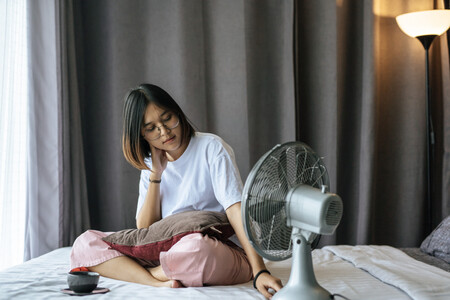
The fan may be a better option than air conditioning
Strategies for Sleeping in the Heat
Effective Solutions. There are strategies to improve sleep in hot conditions, although they often fall short during extreme heat. Creating airflow in your bedroom by positioning doorways and windows strategically can help. If needed, using a fan is generally more effective than air conditioning, which can create a stifling atmosphere.
A warm shower can also be beneficial. Avoiding cold or hot showers is crucial since the body expends too much energy adjusting to drastic temperature changes. Lastly, staying clear of heavy meals, alcohol, or spicy foods before bed is advisable to enhance sleep quality.
As we navigate through these sweltering nights, it’s essential to remember that while these tips can help alleviate discomfort, they aren’t miracle solutions. Recognizing the importance of addressing climate change can also offer long-term benefits for our sleep and overall health.
Image | Magnificent