
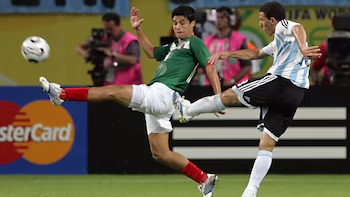
The Resentment of Mexican Fans Towards Argentina
The classification of Argentina to the semi-finals of World Cup 2026 not only showcased their football prowess but also reignited a long-standing animosity among Latin American fans, particularly in Mexico. The Los Angeles Times recently reported that this resentment is rooted in various factors that have historically soured relations between the two nations in the context of football.
Historical Clashes and Controversy
The animosity toward Argentina is not a new phenomenon. It has been building for decades, largely fueled by repeated encounters in the World Cup. Specifically, Argentina has eliminated Mexico in four World Cups: Uruguay 1930, Germany 2006, South Africa 2010, and Qatar 2022. Each of these clashes has left a bitter taste among Mexican supporters.
Key incidents have further inflamed tensions:
- Maxi Rodríguez’s last-minute goal in 2006 during extra time.
- Carlos Tévez’s controversial goal in 2010, which many argue was offside.
- Lionel Messi’s stellar performance in 2022, which highlighted Argentina’s dominance.
These pivotal moments not only evoke anger but also serve as a direct reminder of Mexico’s disappointing outcomes against its South American rival.
Influence of Social Media and Cultural Perceptions
Additionally, the power of social media cannot be underestimated. Conversations online often blend genuine analysis with misinformation, inflating emotions and perpetuating negative perceptions. One incident that dramatically shifted the Mexican public’s view of Lionel Messi was his actions after a match where he left a Mexican jersey on the floor. Boxer Saúl “Canelo” Álvarez interpreted this as disrespectful, which also drew significant media attention.
Messi himself later acknowledged how this incident tainted his image among Mexican fans, complicating his status as a beloved football figure.
Controversies in Refereeing
Recent World Cup discussions have shifted to address allegations surrounding biased officiating. Reports highlighted several questionable refereeing decisions, including a potential red card not reviewed in the match against Algeria and a penalty not awarded against Egypt. These incidents prompted terms like “VARrgentina” and “ArgentFIFA” to trend on social media, illustrating how deeply entrenched the sentiment against Argentina has become.
The Los Angeles Times outlines how even technical explanations from FIFA regarding contentious plays have failed to sway public opinion. Many fans feel justified in their skepticism toward Argentina’s advantages, especially in light of perceived favoritism.
The Legacy of “Antimessism”
Moreover, the phenomenon dubbed “antimessism” amplifies existing frustrations. This disdain originates from historical media portrayals and continues to grow, especially during Messi’s time at FC Barcelona, when rivalries intensified.
Conclusion: Evolving Narratives in Football
As the 2026 World Cup approaches, the blend of historical grievances, social media influence, and refereeing controversies will likely sustain the Mexican disdain towards Argentina. The Los Angeles Times concludes that public perception can evolve more swiftly than official narratives, indicating that the rivalry will likely simmer as Argentina aims for yet another shot at World Cup glory. The heart of this rivalry is not just about football; it’s a complex interplay of history, culture, and emotion that continues to impact fans across nations.