
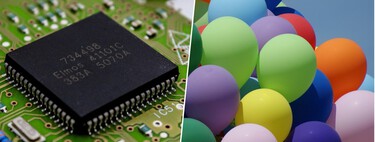
Think of the world as if it were a puppet. It is supported by threads that move, but when one of those threads breaks, the whole wobbles. If several strings break at once, the puppet falls apart. In the technological world, 2026 has started on the wrong foot. The main RAM memory companies have turned to producing memory for AI, abandoning the consumer market. This has caused an unprecedented increase in prices that affects consumers and companies alike.
Right now, it’s impossible to guess when it will return to normal because every party involved thinks one thing. Recently, we have another of those threads that I talked about at the beginning: the war in Iran. The consequence is already evident: the Strait of Hormuz is boiling, with crude oil prices skyrocketing and gasoline—particularly diesel—soaring. But as if that weren’t enough, another crisis looms: the helium shortage.
This situation exemplifies the perfect storm between the RAM crisis and the Iran war, because without helium—well, many crucial technologies cannot function, including artificial intelligence.
RAM Crisis + Iran War = No Helium
For many, helium is merely the gas that gives us funny voices and allows us to inflate balloons. However, in the semiconductor industry, helium is a critical and irreplaceable component in manufacturing processes. As a noble gas, it doesn’t chemically interfere with the materials involved in the silicon crystal growth process. This process is crucial for creating wafers used to produce chips.
Helium acts like a shield, preventing materials from reacting with oxygen or other contaminants, ensuring purer results. It is also essential for dissipating heat in extreme lithography machines, eliminating waste after each manufacturing cycle, and identifying any leaks. Its tiny particles enable the detection of even the slightest leaks in vacuum chambers.
This element cannot be easily substituted. Two companies, Samsung and SK Hynix, are particularly dependent on helium. They have diverted their production focus towards AI memory solutions, sidelining consumer markets. Consequently, they have minimal incentive to address the escalating RAM price crisis impacting SSDs and other NAND chip-based devices.
Both companies play a major role in producing sophisticated HBM4 memory, relying heavily on helium. The challenge is that helium is primarily a byproduct of natural gas production, with major refineries located in the Middle East. The ongoing war in Iran has put civilian targets, such as data centers and energy producers, at significant risk.
Any attack on these infrastructures could cripple Western industries. Kamikaze drones have already been employed against targets like the oil company Ras Tanura and Ras Laffan, operated by QatarEnergy, a key natural gas supplier. If these refineries close, helium supplies will dwindle.
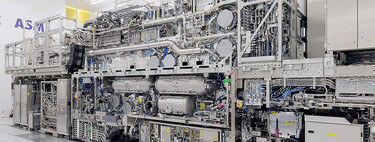
Concerns are already emerging regarding medium-term repercussions. While SK Hynix claims to have a “diversified supply chain and sufficient helium inventory,” similar reassurances from other chip manufacturers, like TSMC, may not hold in the long run. Continuous disruptions in the Strait of Hormuz could affect over 25% of the world’s helium supply.
This would force helium-dependent companies to deplete their reserves more quickly than they can replenish them. The unpredictable market has already reacted, leading to a drop in stock prices for both Samsung and SK Hynix amid supply worries.
The discussion has evolved beyond just rising prices for RAM and gasoline; it now encompasses the fact that helium is vital for manufacturing advanced chips, quantum computing, and even space exploration. As tensions in Hormuz escalate, various entities will vie for this essential, irreplaceable resource.
Faced with SK Hynix’s cautious optimism, some experts are voicing concerns that echoes of the component crisis of 2020 may resurface.
In Xataka | ‘Focus: The ASML Way’: the book that reveals the secrets of the most powerful European company in the chip industry