
The Transformation of Mexico’s Currency: Understanding the Old Pesos
Since 1993, Mexico underwent a significant change in its currency system by eliminating three zeros from its monetary unit. This reform introduced the “nuevo peso”, aimed at simplifying transactions and stabilizing the monetary system following years of inflation.
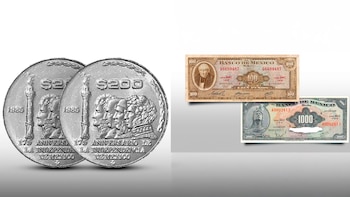
As a consequence, the bills and coins that circulated before this year—denominations such as 10,000, 50,000, or even 100,000—became obsolete and are currently referred to as “viejos pesos”.
According to official information from the Bank of Mexico (Banxico), these old bills are no longer valid for payment, meaning they are desmonetized and cannot be used in transactions.
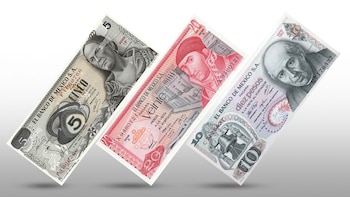
In practical terms, this means that no individual, business, or institution is obliged to accept the “viejos pesos” for purchases, settling services, or paying debts. Even if these bills are not counterfeit and are in good condition, those bills and coins issued before 1993 have lost their commercial value.
The primary reason why this money is not accepted lies in the monetary scale change that began on January 1, 1993, when Banxico circulated the new bills with adjusted denominations. For example, an old 1,000 peso bill is only equivalent to one current peso.
While these bills do not hold validity for purchasing goods or services, it is still possible to exchange them for current currency. Banxico informs that individuals can visit any banking institution in the country to conduct this exchange, provided the money is in conditions allowing for its authenticity verification—that is, at least 50% of the paper must be present and without significant alterations.
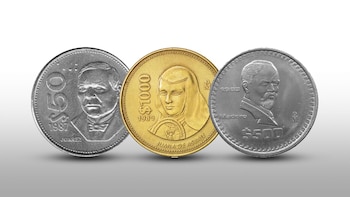
The exchange procedure incurs no cost, and the amount received corresponds to its equivalent in current currency. For instance, if someone retains a 50,000 old peso bill, upon exchanging it, they will receive 50 current pesos.
It is important to mention that banking institutions are authorized to accept these old bills and forward them to the Bank of Mexico, which is responsible for final verification and the permanent withdrawal of these pieces from the market.
To verify if a particular bill can be exchanged, the Bank of Mexico provides online consultation tools and telephone assistance. On its official website (www.banxico.org.mx), the catalog of retired pieces and their current equivalencies is available. Additionally, individuals can call 800 226 9426 for guidance.