
Rethinking the Search for Extraterrestrial Life
For decades, humanity’s search for extraterrestrial civilizations has largely been centered on detecting active technological signatures—signals intentionally emitted by intelligent beings. However, a recent study by Oxford astrophysicist Brian C. Lacki suggests this approach might be fundamentally flawed. Instead, Lacki asserts that we should focus on passive technological signatures that interact with starlight, presenting an intriguing shift in our search methodology.
Active vs. Passive Technosignatures
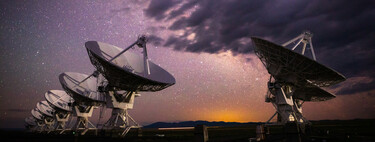
Traditionally, projects like the Search for Extraterrestrial Intelligence (SETI) have prioritized identifying radio signals that could indicate advanced alien technology. These radio emissions, however, are increasingly becoming less relevant in the age of modern communications. As societies evolve, the likelihood of civilizations broadcasting detectable signals diminishes. For example, humans have transitioned away from broad radio emissions toward more directed communication methods, such as fiber optics and satellites.
Lacki argues that if extraterrestrial civilizations follow a similar trajectory, they may have ceased using radio waves for more than a century, making traditional detection methods obsolete. Instead, he proposes that we should explore passive technosignatures—evidence of technological interaction with the light of stars, which could be easier to identify and might reveal a different aspect of intelligent life.
Types of Passive Technosignatures
According to Lacki, passive technosignatures can be categorized into three types: obscuring, flashing, and diffusing.
Obscuring Signatures
Obscuring signatures occur when large objects, possibly artificial satellites, pass in front of a star, temporarily blocking its light. These obscurations might be mistaken for exoplanets, but Lacki suggests we seek unconventional shapes that don’t fit known patterns.
Flashing Signatures
Flashing signatures could be produced by devices with mirrors purposely aligned to reflect a star’s light, similar to advanced solar plants. These mirrors could create observable flares, signaling the presence of a civilization.
Diffusing Signatures
Diffusing signatures would spread starlight in various directions, potentially causing subtler changes that could affect the light spectrum we observe. These changes may offer clues to the existence of advanced technological constructs.
Are They Still Out There?
The notion of finding contemporary civilizations presents its own challenges. It’s possible that any discovered technosignatures belong to long-extinct civilizations that have since fallen silent. In such cases, Lacki posits that leftover technological remnants could form tiny fragments called technograins. These microscopic pieces might be expelled into space, eventually drifting through cosmic dust clouds.
Dust on the Moon: A New Frontier?
One of the most fascinating aspects of Lacki’s theory is his suggestion that some of these technograins could accumulate on the Moon. Given its stable environment—free from wind and geological activity—the lunar surface offers an ideal site for preserving extraterrestrial dust over prolonged periods. By inspecting the lunar regolith, scientists may one day uncover traces of ancient technological activity, leading to a groundbreaking discovery of previously unnoticed intelligent life.
The Future of Lunar Exploration
Lacki’s research indicates that as lunar travel becomes commonplace, we might shift our focus from traditional telescopes to more hands-on exploration, utilizing tools like sieves to sift through lunar dust. Such an approach could revolutionize our understanding of life’s existence beyond Earth and open new avenues in the search for extraterrestrial intelligence.
In conclusion, this bold reimagining of our methods to detect signs of alien civilizations could lead to one of the most significant scientific advancements in human history. Preparing for lunar missions focused on collecting and analyzing lunar dust may be our best bet in uncovering the mysteries of the universe and, possibly, unlocking the secrets of ancient alien technologies.