
The Evolution of Sports: The First World Humanoid Robot Games in Beijing
As summer heats up, many sports enthusiasts eagerly anticipate the Olympics. However, in a surprising twist this year, the spotlight shifts from human athletes to humanoid robots. The inaugural World Humanoid Robot Games, taking place in Beijing, features remarkable participants such as Robotics Lumos, who recently earned a silver medal in the group dance category. While athletes like Simone Biles and Faith Kipyegon captivate audiences worldwide, this event challenges the conventional definition of sports.
The Games kickstarted on August 15 and will run until August 17, featuring over 500 robots competing across various disciplines. Traditional sports such as athletics and martial arts will share the stage with more innovative challenges like medication classification and cleaning tasks. The event opened at the National Speed Skating Oval, which was originally constructed for the 2022 Winter Olympics. The ceremony showcased humanoid robots performing traditional Chinese opera, blending technology with cultural artistry.
A New Frontier in Sports
The World Humanoid Robot Games aim to evaluate and enhance robotics capabilities through sports—a field that naturally engages the human experience. The event includes a staggering 487 competitions where 280 teams from 16 countries compete for gold medals. Participating nations include China, the United States, Germany, and Japan, among others.
Event organizers emphasize the significance of this initiative: testing robotic decision-making, motor skills, and control systems through the lens of athletic challenges. The success of a robot in securing a gold medal signifies its adaptability to real-world environments, such as factories or homes.
The Competitions Unfold
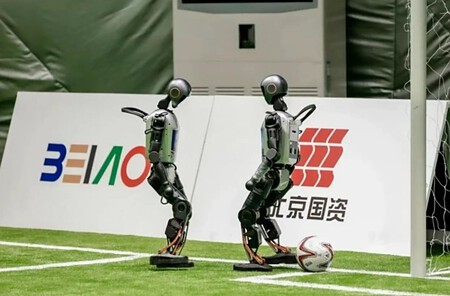
During the competitions, enthusiasts observed varying levels of robotic performance. In one of the first matches—a 5-a-side football game—robots the size of a seven-year-old child appeared to struggle, moving clumsily and often getting stuck in groups. This may seem reassuring for human athletes, knowing that they remain unparalleled in certain aspects of agility and coordination.
However, the 1,500-meter race told a different story. A humanoid robot from Unitree, a leading robotics company, dominated the event, completing the race with impressive agility, clocking in at 6:29.37. While this time far exceeds the male world record of 3:26.00, it demonstrates the growing sophistication of robotic engineering.
Diverse Events and Impressive Innovations
The competition schedule is packed with an array of events. Along with classic sports like 400 meters, soccer, and martial arts, there are unique categories, including industrial materials management and pharmaceutical product handling. The Games also include competitive challenges such as stand-up dance and even hotel cleaning services. Tomorrow’s lineup promises to feature 23 events, culminating in a mix of traditional sports combined with modern challenges.
China, the host of this innovative event, is not only the leading nation in robotics but also invests significantly in technological advancements. The Chinese government has placed humanoid robots at the center of its national strategy. Recently, a fund comprising one billion yuan (approximately 128 million euros) was announced to support emerging tech companies, particularly in AI and robotics.
The Future of Robotics in Sports
As spectators marvel at the capabilities of these robots, the question arises: How long until robots reach human-like proficiency? A spectator shared, “I think that in 10 years or less, robots will be at the same level as humans.” While this statement might induce a sense of urgency for human athletes, current performances show that there is still a considerable gap to close.
Although humanoid robots like those from Unitree demonstrate remarkable speed and agility, many still face considerable challenges in coordination. The event serves as a testing ground for advancements in robotics, providing pivotal insights into the future potential of these machines in competitive scenarios.
The World Humanoid Robot Games are more than just a competition; they symbolize a broader shift in how we view athletics. By merging technology and sports, we enter a new era that challenges our perceptions of competition and the essence of human effort. As we look ahead, one thing remains clear: the intersection of sports and technology is an arena ripe for exploration and innovation.