
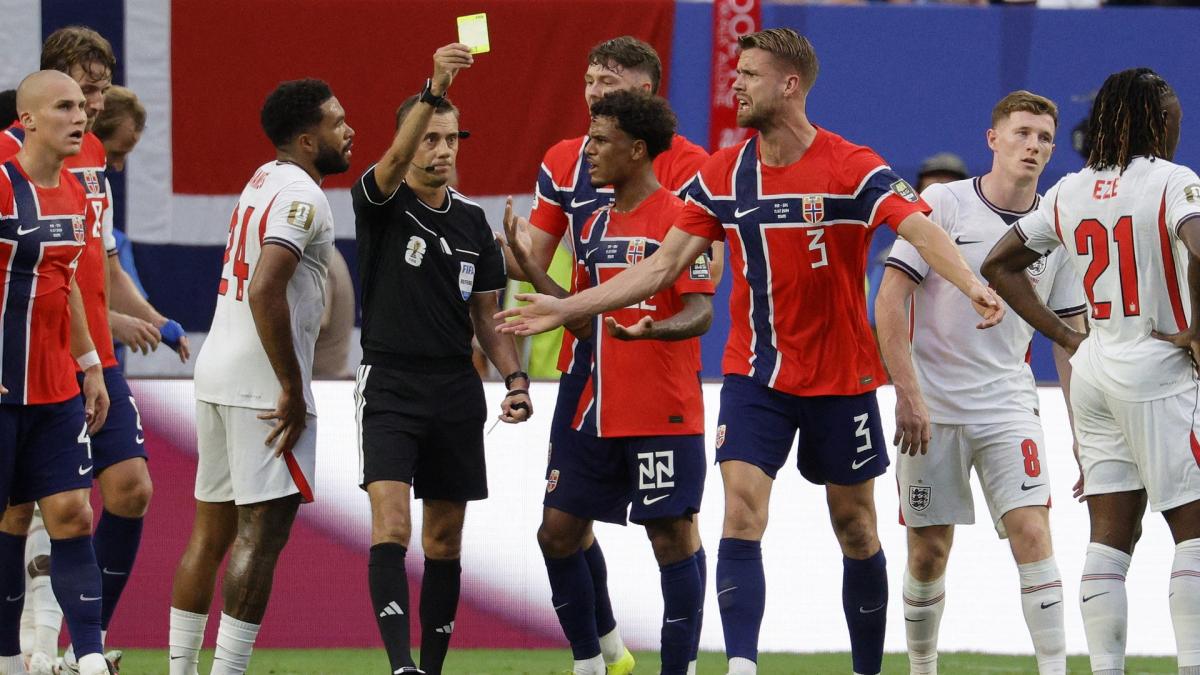
England Edges Past Norway in a Controversial Quarter-Final
England has secured its place in the semi-finals of the 2026 World Cup, narrowly defeating Norway in an intense quarter-final that concluded after extra time with a score of 2-1. The match was exhilarating, filled with energy and tactical battles, but it will be remembered not just for the action on the pitch, but for the significant refereeing controversies that have ignited heated debates among fans and analysts alike.
A Dramatic Match Unfolds
The contest began with England maintaining an edge in possession, attempting to control the game early on. However, the momentum shifted dramatically when Norway’s Andreas Schjelderup scored a fantastic goal, which showcased remarkable skill and left England momentarily stunned. Despite their initial struggles, the English side rallied to equalize just before halftime, thanks to Jude Bellingham’s clinical finish, set up by Anthony Gordon.
The second half was marked by an intense tactical battle where both teams had their chances. A key moment arrived when Norway’s Torbjörn Heggem thought he had scored what could have been a decisive goal, only for VAR to intervene and disallow it due to an earlier foul by Erling Haaland. As opportunities slipped by for both teams, the match was pushed into extra time, where Bellingham would once again become the hero, securing victory for England with his brace.
Refereeing Controversies
The match’s outcome has been heavily clouded by controversial refereeing decisions. Notably, the first controversy revolved around Bellingham’s equalizer. Several Norwegian players argued that the goal should not have counted due to a possible deflection from one of the overhead video capture wires. Though the replays presented no conclusive evidence, this fueled debate among fans and on social media.
In another pivotal moment, the disallowed goal by Heggem left many in the Norwegian camp baffled, especially after VAR ruled that the contact with Haaland on Anderson was enough to overturn the score. This fueled further discussions on the adequacy and consistency of decision-making in high-stakes matches.
FIFA’s Response
In response to the uproar, FIFA swiftly released a statement clarifying the situation surrounding England’s equalizer. They explained that data from the Connected Ball technology was analyzed, showing no evidence that the ball had made contact with the overhead wire, thus confirming the goal as valid.
FIFA stated: “Before England’s 45+2nd minute goal against Norway, the sensor in the Connected Ball showed no spike in the beating heart of the ball when it was in the air, and therefore no evidence that the ball had hit the overhead wire and altered the movement of the ball.” This quick response underscores the sensitivity of the issue and FIFA’s commitment to transparency.
Conclusion
While England celebrates its advancement to the semi-finals, the controversies surrounding the match are likely to linger in discussions among fans, pundits, and historians alike. The importance of clear and consistent officiating in major tournaments such as the World Cup has never been more pronounced, illustrating the delicate balance between human error and technological intervention in football today. As England prepares for its next challenge, the focus will remain on how modern technology can both enhance and complicate the beautiful game.