The Reality of Radioactive Environments
When we think about animals and radiation, we often picture three-eyed fish or gigantic creatures from science fiction. However, the aftermath of radioactive disasters presents a more complex and intriguing reality, particularly from an evolutionary standpoint.
The Data on Radioactive Exclusion Zones
Decades after the catastrophic incidents at Chernobyl in 1986 and Fukushima in 2011, researchers are collecting vital data to understand the impact of radiation on wildlife returning to abandoned “exclusion zones.” Recent studies indicate that, rather than encountering monstrous mutations, we are witnessing rapid genetic changes, forced adaptations, and physiological scars in various species.
The Case of Chernobyl
The Chernobyl Exclusion Zone has transformed into an unintentional nature reserve. As human activity diminished, wildlife began to flourish, but genetic studies reveal a tale of invisible stress. For instance, research on barn swallows has shown an alarming rise in partial albinism, a visible marker of genetic instability. Their germline mutation rate skyrocketed—between 2 to 10 times higher than those in less affected areas.
Feral Dogs in Chernobyl
Perhaps the most surprising findings emerged from the descendants of pets abandoned during the Chernobyl evacuation. A genomic study has illustrated a distinct genetic structure among feral dogs near the nuclear plant compared to dogs just a few kilometers away. Significant changes in DNA repair genes suggest that those with superior cellular mechanisms are more likely to survive and reproduce, affirming the significance of multigenerational selection.
Fukushima: A New Frontier for Adaptation
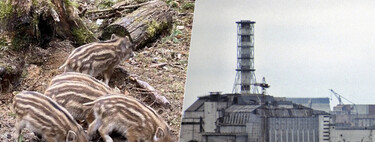
Moving to Japan, the Fukushima disaster has allowed observation of wildlife’s immediate and long-term adaptations. One fascinating study revealed that domestic pigs escaping from abandoned farms began mating with wild boars. This hybridization not only produced unique hybrids but also resulted in accelerated biological changes.
Biological Acceleration in Hybrids
The mating of these species is not creating “radioactive mutants,” but rather instances of accelerated evolutionary adaptations. These hybrids exhibit significant changes, particularly regarding reproduction cycles. Unlike wild boars, which have a set breeding season, domestic pigs reproduce year-round. Hybrid offspring often inherit this rapid reproductive potential, leading to a notable acceleration in generational turnover.
The Paradox of Hybrid Proliferation
Despite the apparent rampant reproduction of hybrids, their presence in the Fukushima area is paradoxical. The dominant population of wild boars leads to extensive backcrossing, diluting the domestic genes of the hybrids. Consequently, although mitochondrial DNA reveals their domestic lineage, their nuclear DNA aligns increasingly with wild boars.
Other Radiative Case Studies
The Butterfly Effect
In Fukushima, research on the pale grass blue butterfly between 2011 and 2013 shed light on remarkable evolutionary shifts. An initial spike in deformities led to a subsequent stabilization, indicating a “purge” process where less resilient individuals perished, leaving behind a more robust population.
The Mayak Disaster
Before Chernobyl, the Mayak disaster in Russia (1949-1952) illustrated the long-term impact of chronic radiation exposure on aquatic organisms. Studies have shown that radioactive contamination in water poses different exposure challenges, impacting the local fish populations for decades.
The Spanish Incident
Spain’s 1966 Palomares incident, where thermonuclear bombs were inadvertently dropped, demonstrated detectable radiation levels in local snails and invertebrates, showing that even countries without significant nuclear events are affected by radiological incidents.
Conclusion
Research into the evolutionary effects of radiation reveals a perplexing narrative of adaptation and survival. The monsters we feared are absent; instead, we witness a reality underscored by resilience and rapid evolutionary changes. The ongoing exploration of these radioactive environments continues to reshape our understanding of wildlife adaptation in the face of catastrophic events.