
Irene Montero’s Critique of Zapatero: An Unfolding Political Drama
Unveiling the Controversy
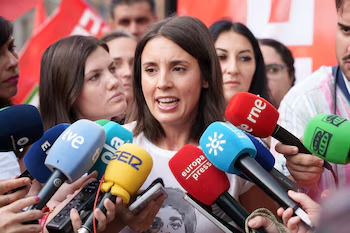
Irene Montero, the MEP and political secretary of Podemos, did not mince her words when addressing the former Spanish president, José Luis Rodríguez Zapatero. She remarked that “it looks very ugly” for him, implying that his recent actions and statements have raised significant concerns about transparency and integrity within the political landscape. Montero’s observations have led to widespread speculation regarding the implications of Zapatero’s conduct, suggesting that the issues at hand are far from pleasing.
Criticism of Current Governance
In her remarks to Cadena Ser, Montero took aim not only at Zapatero but also at the current government coalition formed by the Socialist Workers’ Party (PSOE) and Sumar. She articulated a growing disappointment among citizens, emphasizing the government’s failure to tackle corruption, address the housing crisis, and combat gender-based violence. These critiques reflect a sense of urgency among the leftist factions to reassess their strategies and accountability.
Montero stated, “This is a problem for our country, and we have to leave here on the left,” highlighting a need for reform within leftist politics to regain public trust. Her assertion points to a broader discontent with the ruling parties, which many believe are not fulfilling their responsibilities effectively.
The Zapatero Interview: A Turning Point?
The political discourse intensified following Zapatero’s recent interview where he denied any influence over the controversial Plus Ultra rescue. The former president also claimed that the jewelry found in his safe was merely a “courtesy gift.” Such statements have stirred skepticism, as Montero emphasized that the prevailing silence surrounding Zapatero’s actions creates an atmosphere ripe for speculation and doubt among the public. She noted that many progressive supporters hope for a more benign interpretation of Zapatero’s actions, but she believes their disappointment is growing.
The Leire Díez Case: Implications of Corruption
Further complicating the political narrative is the ‘Leire Díez’ case, which Montero highlighted as evidence that corruption is intricately woven into the fabric of the PSOE and the current government. She argued that connections within the political elite have obscured accountability, questioning how individuals like Díez would gain access to power if not for their ties with influential figures in the PSOE. Montero contends that this interconnectedness dilutes the credibility of political institutions and casts a long shadow over public trust.
Firefighters’ Crisis: A Call to Action
On another significant front, Montero expressed her concern about a group of forest firefighters in the Community of Madrid who have taken to social media to issue a stark warning about the lack of resources and personnel during ongoing fire crises in the region. This situation adds another layer to Montero’s platform, suggesting that the government is not only failing to address higher-level corruption but is also neglecting pressing social and environmental issues.
Conclusion: A Divided Left
Irene Montero’s statements underscore a critical evaluation of the Spanish political climate, particularly from the perspective of leftist factions. Her critiques highlight a growing sentiment among progressives who are increasingly dissatisfied with their leadership and the status quo. As Spain navigates through these murky waters of politics, the demand for transparency and accountability remains ever-present, signaling a call for change from both leaders and constituents alike.