
The Death of Fanil Sarvarov: A Key Figure in Russian Military Strategy
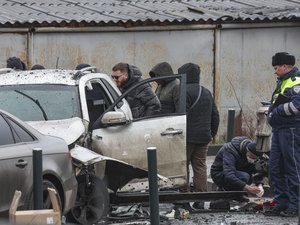
Fanil Sarvarov, a prominent Russian general and head of the operational training department of the General Staff, met a tragic end on December 22, 2022, as his vehicle exploded in Moscow. The Russian Investigative Committee confirmed his death, citing an explosive device placed under his car. This incident highlights not only the volatility of the current political landscape in Russia but also raises questions about the challenges faced by the Russian military establishment.
Circumstances of His Death
At approximately 6:50 a.m., Sarvarov was ambushed in his parking lot on Yasenevaya Street, where he resided. Initial reports indicate that an explosive charge was strategically placed under the chassis of his Kia vehicle. Following the explosion, Sarvarov sustained severe injuries and was rushed to the hospital, where he ultimately succumbed to his wounds. His unexpected assassination sends shockwaves through military and political circles, underlining the covert threats that loom even within the ranks of the Russian armed forces.
Role and Impact in the Russian Military
Sarvarov’s military career spanned decades, with significant contributions to Russia’s operational readiness. Since 2016, he served as the head of the operational training department under the General Staff of the Armed Forces. This department is crucial for the “short and medium term planning for the preparation of armed forces” and the “coordination of operational training plans,” as outlined by the Russian Defense Ministry.
His promotion to lieutenant general by President Vladimir Putin in May 2022 positioned him among the highest echelons of military leadership. His role included setting strategic directions for training and operational capabilities of the Russian military, making him an integral player in Moscow’s military endeavors, particularly as the conflict in Ukraine escalated.
A Veteran of Conflict
Born on March 11, 1969, in Gremiatchinsk, Fanil Sarvarov built an extensive resume within the Russian military by serving in several significant conflicts, including the Chechen wars and operations conducted in Syria from 2015 to 2016. His career reflects a long-standing commitment to Russia’s military objectives, and his contributions were especially vital during critical periods of military engagement.
Sarvarov’s death is notably significant as he is one of the highest-ranking officers to be killed since the onset of the Ukraine war. His assassination raises troubling questions regarding internal security and the challenges confronting the Russian military at a vital juncture in its ongoing military endeavors.
The Bigger Picture
The assassination of Fanil Sarvarov may signal deeper issues within the Russian military infrastructure. As one of the top officials in charge of training and operational readiness, his loss could have far-reaching implications for the operational capabilities of Russian forces. The incident reveals the precarious nature of leadership within the Russian armed forces, where external threats can rapidly escalate to internal chaos.
In summary, Fanil Sarvarov’s untimely demise serves as a stark reminder of the intense risks associated not only with military operations in conflict zones but also with the leadership dynamics within Russia itself. As the country continues to navigate a complex geopolitical landscape, the ramifications of Sarvarov’s death will likely resonate far beyond the immediate circumstances of his assassination.