
Vicky Dávila’s Alarming Accusations Against President Petro
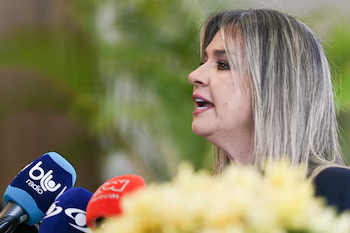
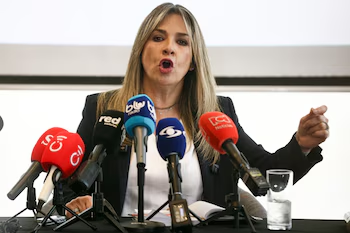
Presidential candidate Vicky Dávila has raised serious allegations against President Gustavo Petro, claiming he is orchestrating a “macabre” plan to undermine the legitimacy of Colombia’s electoral process. During the Diálogos por el Valle meeting on February 23, Dávila expressed concerns that Petro would mobilize public unrest if the electoral results did not favor him.
Concerns Over Electoral Legitimacy
Dávila highlighted a pattern of behavior from Petro, pointing to his ongoing criticism of the electoral system and institutions like the Registrar. She described these actions as attempts to delegitimize the election outcomes, particularly if the opposition—led by figures like Iván Cepeda—emerges victorious.
“Petro is committed to a macabre plan against the elections,” she stated, suggesting that he may refuse to accept the results and provoke social unrest. Dávila cautioned that the President’s rhetoric around electoral software is dangerous and misleading.
The Opponent as a Target
Dávila asserted that Petro is specifically targeting the upcoming elections, particularly if his political adversaries—especially Iván Cepeda—are successful. She cautioned against a potential scenario where Petro calls for street protests to contest the legitimacy of the vote.
“What the President wants when we defeat Iván Cepeda is to claim he doesn’t accept the results and to incite chaos in Colombia,” she stated vehemently.
Proposals for Change and Social Issues
Beyond her accusations, Dávila addressed pressing issues such as corruption in Buenaventura, which she characterized as a hub for organized crime. She expressed the urgent need for reforms to address corruption and raised concerns about the poverty afflicting many neighborhoods in this port city.
“The port is rotting with corruption, and we must eradicate it,” she remarked, highlighting the drastic economic inequalities in the region.
A Vision for Employment and Business
Dávila also outlined her vision for tackling unemployment and supporting the business sector. She proposed establishing training programs for those seeking to abandon criminal activities and emphasized the necessity of facilitating credit and supporting both large and small enterprises.
“Being an entrepreneur has become a punishment; this will change under my leadership,” she assured attendees at the meeting.
Conclusion: A Call to Action
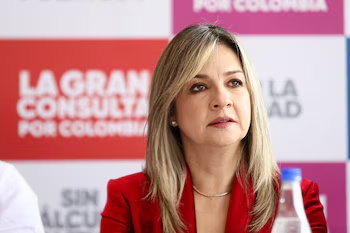
Ultimately, Vicky Dávila’s remarks serve as a clarion call for her supporters and the Colombian electorate as a whole. She urged citizens to be vigilant against potential disruptions in the electoral process, advocating for a clean and fair election devoid of manipulative tactics. The developing political landscape surrounding Gustavo Petro and Iván Cepeda continues to raise alarms about the future of democracy in Colombia. Dávila’s proposals not only aim to address the systemic issues but also outline a hopeful vision for a more secure and economically stable nation.