
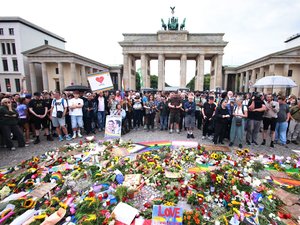
German police are searching for a 21-year-old Islamist suspect following a tragic vehicle and knife attack during the Berlin Gay Pride celebration on Saturday, July 25. Occurring near Tiergarten Park, the incident resulted in one fatality and left 16 individuals injured, 11 of whom sustained serious injuries.
### Assailant Shot Dead by Police
As the investigation unfolded, police located the suspect, identified as Abdul B., on Sunday evening in the Spandau district of Berlin. He was shot and killed during a police operation. According to authorities, the suspect charged at the officers with a bladed weapon, prompting them to respond with lethal force. Despite immediate medical assistance, the man died at the scene.
### Details of the Attack
The incident began around 10 p.m. when a vehicle drove into a crowd of participants at the Gay Pride festivities. Witnesses reported chaos as the vehicle struck pedestrians before crashing into a tree. Emergency responders noted that the scene was gruesome, with multiple individuals injured, and three were classified as emergency cases. Chancellor Friedrich Merz confirmed that although one woman tragically lost her life, there were no longer any persons in critical condition.
### Victim and Impact
The deceased victim was identified as a woman attending the Pride event, which, being one of Europe’s largest gay pride parades, underscores the gravity of this act of violence. Following the unthinkable occurrence, authorities canceled the remainder of the festivities, and the impact of the attack reverberated throughout the nation, which has been grappling with similar incidents.
### Profile of the Suspect
Abdul B. is described as a young German of Lebanese descent, who was already known to authorities for previous offenses and radicalization links. The German Interior Minister indicated that he had been previously convicted in May for attempting to join the Islamic State in Syria. Despite his conviction, he did not serve prison time, escaping a harsher sentence due to prior detentions that contributed to his legal penalties.
### Response from Authorities
In light of the attack, police issued an urgent appeal for witnesses, sharing a physical description of Abdul B. He is characterized as tall (approximately 1.90 meters), with black hair, and was last seen wearing a black hooded sweatshirt and white pants. Chancellor Merz condemned the attack, stating that such acts aim to divide society, encouraging the LGBTQ+ community not to be intimidated.
### Societal Repercussions
This attack has reignited the intense discourse surrounding public safety, particularly at LGBTQ+ events in Germany. It also raises concerns regarding immigration and radicalization, as previous attacks in Germany have often involved individuals of foreign origin. The last major tragedy, a Christmas market attack by a jihadist in 2016, still resonates in the public consciousness, provoking discussions on national security.
### Conclusion
The Berlin Gay Pride attack stands as a stark reminder of the ongoing threats faced by marginalized communities. As the investigation continues, the ramifications on societal cohesion and public safety will likely spur further dialogues about intolerance and security measures necessary to protect vulnerable populations. The sentiments of unity and resilience that the pride parades stand for will undoubtedly remain in the hearts and minds of the participants and allies in the face of such violence.