
US Sanctions Target ICC Judges
The recent sanctions imposed by the United States on two International Criminal Court (ICC) judges have raised significant international concern and criticism. These measures specifically target Gocha Lordkipanidze from Georgia and Erdenebalsuren Damdin from Mongolia for their involvement in a ruling against Israel regarding alleged war crimes during a military offensive in Gaza.
Reasons for the Sanctions
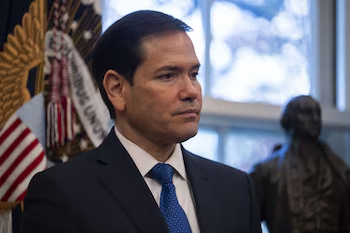
The sanctions came after the ICC dismissed an appeal from Israel aimed at halting ongoing investigations into these allegations. US Secretary of State Marco Rubio outlined that their actions were necessary as the judges were instrumental in endeavors that could lead to investigations and potential legal actions against Israeli citizens without Israel’s consent. Rubio emphasized that the US views these actions as an overreach of the ICC’s jurisdiction, particularly concerning non-signatory nations like the US and Israel.
Legal Framework of Sanctions
The sanctions fall under Executive Order 14203, titled “Imposition of Sanctions on the TPI,” which aims to exert pressure on international decisions perceived as politicized or threatening to US or allied interests. Rubio pointed out that the court’s activities could potentially subject citizens of non-signatory nations to its jurisdiction, creating a precedent that the US finds deeply concerning.
ICC’s Response to Sanctions
In response, the ICC strongly condemned the sanctions, describing them as a direct assault on the court’s independence and impartiality. The court highlighted that external pressures could undermine global rule of law, and these sanctions threaten the integrity of judicial processes. The ICC reiterated its commitment to supporting victims of international crimes and preserving its autonomy in delivering justice, undeterred by political pressures.
Historical Context
The tension between the US and the ICC is not a novel phenomenon. This clash reflects a long-standing disagreement about the court’s jurisdiction, particularly where US citizens or allies are concerned. In November 2024, the ICC issued arrest warrants for prominent Israeli officials, including Prime Minister Benjamin Netanyahu, in connection with alleged war crimes. Such actions have historically provoked strong reactions from the US government, especially under the Trump administration, which initiated prior sanctions against ICC officials.
Broader Implications of the Sanctions
These latest sanctions deepen the rift between the US and the ICC, highlighting questions of legitimacy and jurisdiction that have pervaded discussions surrounding the court’s role in international law. By sanctioning judges, Washington is not only challenging the ICC’s authority but also setting a precedent for how international judicial processes interact with national interests.
As the ICC maintains its commitment to pursuing justice, the international community watches closely to see how these sanctions will affect future legal proceedings and the broader geopolitical landscape surrounding international law and human rights. The ongoing tension indicates that the relationship between national sovereignty and international accountability will remain a pivotal issue moving forward.