
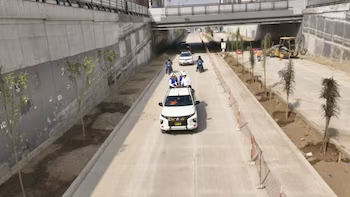
Vía Expresa Grau: Transforming Lima’s North-South Commute
Overview of the Mega-Project
The Vía Expresa Grau is set to revolutionize daily travel across Lima, as it establishes an unprecedented connection between the Metropolitano system and Metro Line 1. Planned for completion in April 2026, this 2.8-kilometer corridor aims to facilitate a seamless commuting experience for over two million users. This ambitious initiative represents an investment exceeding 96 million soles and promises to dramatically reduce travel times in the bustling Peruvian capital.
Addressing Congestion in Lima
Lima’s transportation system has long been plagued by congestion and fragmentation. According to Lech Espinoza Arteaga, the Infrastructure Manager at the Municipal Company to Support Strategic Projects (Emape), 22,000 individuals utilize the Metropolitano Central Station daily, while another 5,000 use the Grau Station on Line 1. The current infrastructure fails to meet the high demand for central areas like Cercado and La Victoria, which necessitated the conception of this mega-project to enhance travel efficiency.
Reduced Travel Times
Once operational, the journey from Carabayllo to Villa El Salvador will take just 45 minutes. This reduction in travel time is aimed at long-distance commuters but also opens up new pathways for those looking to access commercial hubs like the Central Market and Gamarra in La Victoria.
Strategic Stops for Increased Accessibility
The Vía Expresa Grau will feature four strategically located stops: Abancay, Andahuaylas, Parinacochas, and Nicolás Ayllón. These stops are designed to enhance access to high-activity economic zones while providing increased interconnectivity. Currently, progress on the construction of both Abancay and Andahuaylas is impressive, with 90% and 95% completion rates, respectively.
Urban Transformation Beyond Transportation
The project’s impact extends beyond transportation improvements. Significant urban development is already underway, with the section between Plaza Grau and Jirón Junín completed, while progress between Lucanas and Junín is at 50%. Furthermore, the landscape design includes planting more than 80% of the 160 palm trees and 360 guaranguays as an integration effort to beautify the corridor.
Innovative Design Features
One notable feature will be the transfer station with pedestrian viaduct at Nicolás Ayllón, which aims to facilitate easy transfers between the Metropolitano and Line 1 systems. As reported by Espinoza Arteaga, construction for this key component is projected to begin in February 2026.
Future Plans and Connectivity
In addition to the new transit corridor, plans include updates to the traffic light system and adaptations of both main and auxiliary roads. These changes are expected to greatly increase mobility in response to Lima’s ongoing urban challenges, especially with the holiday season approaching.
Conclusion: A New Era for Lima’s Commuters
The Municipality of Lima anticipates that the Vía Expresa Grau will become a cornerstone of urban connectivity. This project promises to significantly improve traffic flow, reduce travel times, and revitalize commercial and residential hubs throughout the city. As the mega-project advances toward its completion date, the future of commuting in Lima looks increasingly promising.