
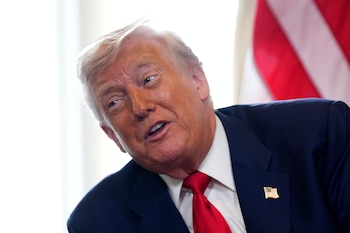
The President of the United States , Donald Trump, has recently piqued interest with his directive to the Department of Commerce to initiate a new census that purportedly excludes “people who are in the country illegally.” However, specifics on the methodology and timeline remain ambiguous.
Understanding the New Census Directive
The president emphasized the need for this undertaking to commence “immediately” in order to conduct a more precise study based on data collected during the 2024 presidential elections . This bold proposal was shared via Trump’s account on the Social Truth Network , amplifying his ongoing focus on immigration and border security.
Historical Context of the U.S. Census
The United States conducts a large-scale census every ten years, with the next one scheduled for 2030. The census plays a crucial role beyond mere population counting; its results directly affect funding distribution and the allocation of congressional seats among states. Therefore, the implications of Trump’s announcement could significantly impact areas with high concentrations of undocumented immigrants .
Impact on Migrant Communities
Trump’s return to the White House has seen him reassert calls for stricter restrictions on immigration, including advocating for the deportation of individuals who lack proper residency permits. This stance has led to stark criticisms of more lenient immigration policies enacted by local and state Democratic administrations . The new census approach could potentially amplify the impact on regions that rely heavily on immigrant communities, thereby exacerbating existing vulnerabilities.
Political Ramifications
This initiative, perceived by many as a political maneuver, raises vital questions about representation and equal rights in the United States. If a census systematically excludes undocumented immigrants, it could lead to underfunding for schools, healthcare services, and infrastructure in areas with notable immigrant populations. Critics argue that this could perpetuate cycles of poverty and limit access to opportunities for countless individuals.
Expert Opinions
Experts in sociology and immigration policy have weighed in on the potential ramifications of executing such a census. Dr. Maria Sanchez , an immigration expert, stated, “Excluding undocumented citizens from the census count undermines the principle of representation that is foundational to our democracy. These individuals contribute to society and should not be invisible in data that influences policy.” Her insights underscore a broader concern regarding the ethics of how populations are accounted for in government statistics.
Concerns Over Implementation
The lack of clarity surrounding how this new census will be conducted invites skepticism. Implementation challenges may arise, especially in balancing the need for an accurate count with the desire to exclude certain populations. Ethical considerations also play a critical role; a census that actively omits individuals raises alarms about the rights and dignity of all residents, regardless of immigration status.
A Shift in Policy Direction
Moreover, Trump’s approach marks a significant shift in the ongoing discourse about immigration in the U.S. By framing this new census as necessary for national security, the administration is likely to deepen societal divides on the issue. The conversation around immigration is no longer just about legality; it has become inseparable from broader discussions on American identity and values.
The interplay of these factors is complex, with far-reaching consequences. As the debate unfolds, it remains to be seen how public opinion will evolve in response to these shifts. Advocates for migrant rights are gearing up for a robust campaign to challenge this directive, urging a more inclusive approach to immigration policy and representation.
In conclusion, the proposed census directive by President Trump highlights critical issues related to immigration and representation in the U.S. As the nation grapples with these changes, the implications for both undocumented immigrants and the broader society are profound, necessitating continued dialogue and advocacy for fundamental rights and protections.