
INDECI Statement After Earthquake in Chupaca
The city of Huancayo experienced a tense night following two seismic tremors that struck the region, prompting hundreds of residents to evacuate to the streets in fear of aftershocks. Reports indicated that many people were visibly alarmed and sought refuge in open spaces to avoid potential harm from any new earthquakes.
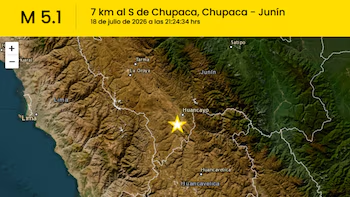
According to the Geophysical Institute of Peru (IGP), the primary quake registered a magnitude of 5.1 and occurred at 9:24 PM on Saturday, July 18, 2026. The epicenter was located in Bass Chongos, within the Chupaca province of Junín, at a depth of 24 kilometers. The intensity reached levels IV-V in Chupaca. The National Emergency Operations Center (COEN) confirmed that the tremor was felt moderately in several districts, including Ahuac and Yanacancha, while districts such as Chupaca and Huachac reported lighter sensations.
The local governments’ Disaster Risk Management Offices, working in tandem with first responders, are actively monitoring the situation. As of now, no casualties or injuries have been reported. The National Institute of Civil Defense (INDECI) has urged the public to remain calm, stay in safe locations, and ensure they have an Emergency Backpack prepared.
This is How the Tremor was Experienced in Huancayo
Footage captured during the 5.1 magnitude earthquake shows the immediate reactions of people inside establishments, including a restaurant evacuation, as well as scenes from the bustling streets of Huancayo that night.
There Is No Damage, But There Is a Replica in Junín
Julio César Gálvez Caballero, an executive from the Junín Decentralized Directorate of INDECI, reported ongoing evaluations in neighboring districts. Fortunately, no major damage has been documented. However, he did caution that preparedness is essential. Following the initial earthquake, at 9:41 PM, a secondary quake measured 3.7 in magnitude, originating 14 kilometers southwest of Chupaca, with an intensity rated at III.
The Power Went Out in a District of Huancayo After the 5.1 Earthquake
During this significant event, a power outage impacted several areas in the Chilca district of Huancayo. Numerous people took to the streets, describing this quake as the strongest they’ve felt in years.
Earthquake in Junín of 5.1
On July 18, 2026, the IGP confirmed a 5.1 magnitude earthquake occurred at 9:24:34 PM, with its epicenter just 7 kilometers south of Chupaca at a depth of 24 kilometers. The coordinates for this event were -12.12 latitude and -75.28 longitude.
Earthquake Between Ucayali and Loreto
Earlier that day, a 3.7 magnitude earthquake was recorded at 4:54 PM, located 93 kilometers northeast of Pampa Hermosa in the region between Ucayali and Loreto, with a depth of 35 kilometers and intensity measured at II-III.
Earthquake in Arequipa
At 9:40 AM, a 3.5 magnitude earthquake occurred 12 kilometers south of Punta de Bombón, Arequipa region, registering a depth of 51 kilometers.
Tectonic Factors and Location of Recent Seismic Activity
The IGP attributes the frequent earthquake activity in Peru to the movements of tectonic plates. The interaction of the Nazca and South American plates repeatedly releases energy, leading to seismic events across various regions. Recent epicenters have been located throughout the coastal areas and mountainous sectors.
Peru: A Nation Exposed to the Dynamics of the Pacific
Peru sits within one of the world’s most active seismic zones, meaning it regularly experiences earthquakes of varying magnitudes. This geographical reality necessitates the establishment of robust contingency plans and ongoing preparedness to handle natural emergencies effectively.
Essential Actions to Reduce Risks in the Event of an Earthquake
To bolster safety and preparedness, the following measures are recommended:
- Identify safe areas within your home and community.
- Maintain an emergency backpack containing essential supplies.
- Participate in drills organized by local authorities.
- Educate all family members about evacuation routes and emergency resources.
- Assess your home’s infrastructure to uncover potential vulnerabilities.
Recommended Emergency Backpack Supplies
An emergency backpack should include supplies for basic needs post-earthquake:
- Bottled water and non-perishable food
- Personal hygiene items (toothbrush, soap, towels)
- A first aid kit with necessary medications
- Flashlight, portable radio, and extra batteries
- Important documents and cash
- Warm clothing, blankets, and sturdy shoes
- Specific items for babies, seniors, or pets as needed
It’s critical to routinely check your backpack to ensure supplies remain fresh and ready for emergencies.
This article compiles crucial information concerning recent seismic activity in Peru and emphasizes the importance of preparedness and risk management in earthquake-prone areas.