
Addressing Urban Heat in Spain
With temperatures soaring, and Aemet predicting more heat waves exceeding 40 degrees Celsius across Spain, the importance of urban planning has never been clearer. Beyond traditional cooling methods like air conditioning and fans, cities need to invest in sustainable urban solutions that will reduce heat absorption in both buildings and streets.
The Promise of Cold Pavements
One effective strategy gaining traction is the use of innovative pavements that mitigate heat. These “cold pavements” fall into two main categories:
1. Permeable or Porous Pavements
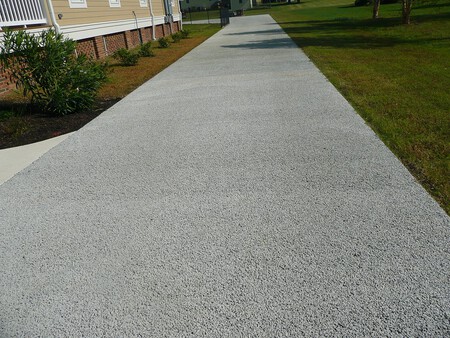
Permeable pavements feature a network of interconnected holes that allow rainwater to infiltrate the ground rather than flow directly to storm drains. This stored water gradually evaporates, cooling the surrounding air and helping to minimize flash floods.
2. Reflective or High Solar Reflectance Pavements
In contrast, reflective pavements (often referred to as “cool pavements”) do not focus on water filtration. Instead, they aim to reflect a substantial percentage of solar radiation back into the atmosphere, preventing the sun’s energy from being absorbed and stored as heat, unlike traditional black asphalt.
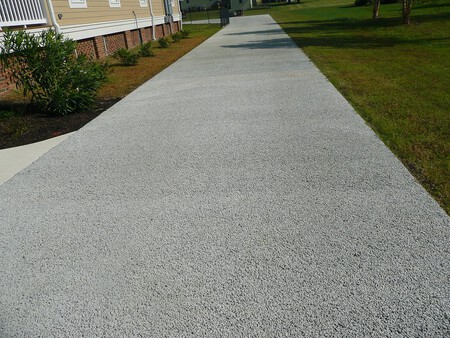
A type of porous pavement. Image: Pavipor
Urban Heat Islands
One of the primary issues driving heat retention in urban environments is the widespread use of dark asphalt and concrete, which absorb substantial sunlight and release it slowly throughout the night. This effect contributes to the phenomenon known as the urban heat island, leading cities to experience significantly higher temperatures than nearby rural areas. As extreme heat events become more common, any measure that can lower street temperatures, even by a small margin, is valuable.
Real-World Applications in Spain
Barcelona is leading the way in implementing these innovative pavements. The City Council, with help from the Polytechnic University of Catalonia (UPC), recently approved a reflective pavement on Martí i Franquès street to demonstrate its effectiveness against conventional asphalt. This type of pavement is designed to reflect more solar radiation, contributing to a cooler city environment.

Barcelona installing a type of reflective pavement. Image: Barcelona City Council
This initiative is part of the city’s broader Climate Plan. Interestingly, before testing pavement options, Barcelona experimented with painting building roofs white to reflect heat, further displaying a commitment to reducing urban temperatures.
Seville is also exploring similar strategies, including the introduction of lighter pavement materials and extensive tree planting to provide shade and enhance urban livability. These innovations represent a holistic approach to battling extreme temperatures.
The Importance of Context
By analyzing thermal dynamics, a study from the University of Granada revealed that effective cooling solutions can differ across cities. For instance, in Seville and Malaga, the material’s albedo—its solar reflectance—plays a crucial role, while factors like building density and street design are more significant in cities like Córdoba and Granada. Dense canopy trees remain one of the most effective ways to lower temperatures naturally in parks and open spaces.
In conclusion, while both porous and reflective pavements offer promising solutions for reducing urban heat, their effectiveness is enhanced when paired with other green urban strategies. The holistic approach is essential for cities to adapt to changing climates while ensuring comfort for their residents.