
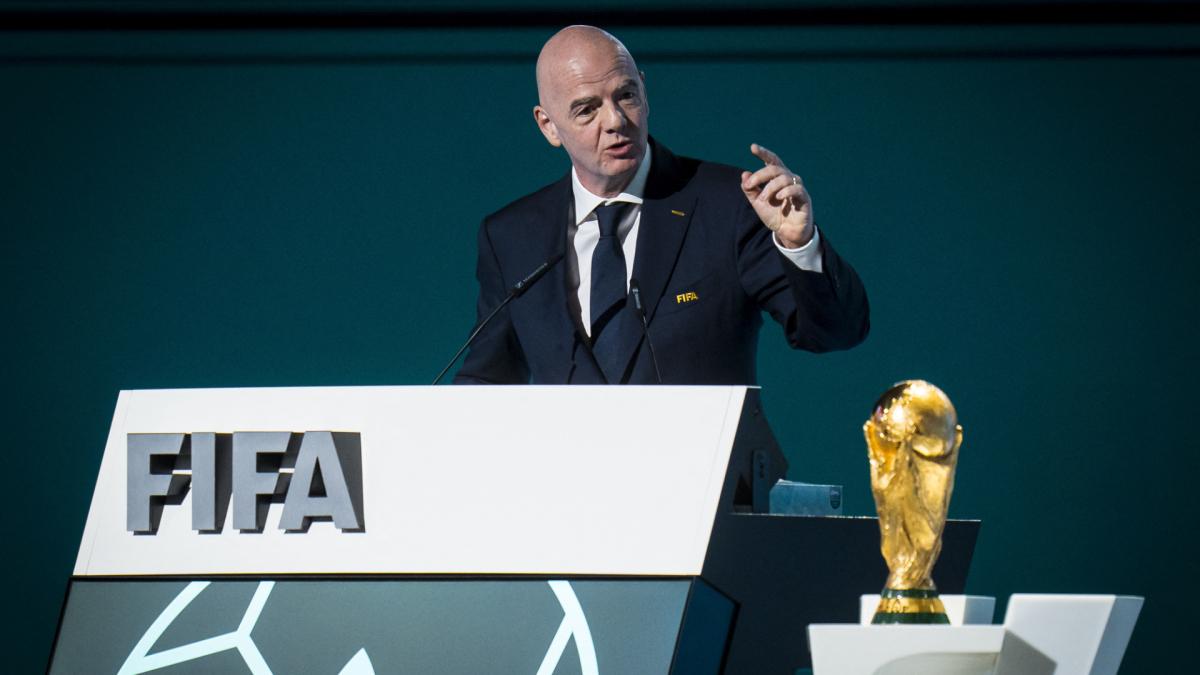
## Gianni Infantino’s Support for the 48-Nation World Cup Format
At a recent gathering with 211 FIFA member federations, Gianni Infantino, the President of FIFA, reinforced his enthusiasm for the new World Cup format involving 48 teams. Infantino stated, “The expansion to 48 teams has shown that giving more countries the chance to compete only makes the FIFA World Cup stronger. New nations have inspired millions, unforgettable stories have captured hearts across the world, and football has proven once again that it is a universal language.” His remarks reflect a growing sentiment within FIFA that inclusivity can enhance the global tournament’s appeal.
## The Impact of Expanding Participation
### Elevating Global Interest in Football
The decision to include more nations in the World Cup has been transformative. By allowing a more diverse range of countries to participate, FIFA aims to widen the sport’s appeal and engage new fanbases. This expansion has encouraged countries with less footballing history to strive for qualification, resulting in heartwarming stories and unforgettable moments that resonate globally.
### Inspiring the Next Generation
As football enthusiasts tune in to watch nations they may not have previously considered, young fans are inspired by their teams’ journeys. The inclusion of more teams allows for a greater narrative arc, showcasing underdog successes and rich cultural representations. This has the potential to nurture a love for the sport in countries previously unrecognized on the world stage.
## Future Considerations: Expanding to 64 Teams
### A New Proposal from FIFA
Infantino’s approval of the current format sets a precedent for further changes. Discussions are already underway regarding the possibility of increasing the World Cup to 64 teams for future editions. This proposal, largely championed by Arsène Wenger, suggests that making the tournament even more inclusive could enhance its allure.
### The Logistics of Group Stage Expansion
Should FIFA choose to extend the World Cup to 64 teams, the structure would shift to accommodate additional teams. The proposed group stage would see the addition of a Group P, maintaining the format of the first two teams qualifying from each group. Such an expansion would require careful logistical planning to ensure that the excitement of the tournament remains intact while managing the complexities involved in scheduling and hosting.
## Conclusion: A Stronger Future for Global Football
As Gianni Infantino and FIFA explore these new formats, the future of the World Cup looks promising. The expansion to 48 teams has already shown its potential in inspiring fans and fostering excitement. With discussions of a possible move to 64 teams on the horizon, the world waits to see how FIFA will continue to revolutionize the beautiful game, ensuring that football remains a universal language that unites nations, cultures, and fans globally.