
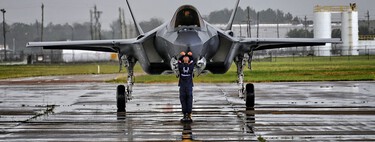
Lockheed Martin, the renowned aerospace and defense company, is currently facing serious challenges concerning its image and operations as an unprecedented summer of crisis unfolds. What began as a single incident has now spiraled, marking one of the most tumultuous periods in the company’s history. This turmoil can be traced back to a month-long stranding of a military aircraft in India, followed by Spain’s abrupt reversal on a significant order for 50 F-35 jets. These events have sowed doubt among various nations contemplating their own purchases of the F-35 .
A Second Breakdown
The latest incident involved the British aircraft carrier HMS Prince of Wales, which serves as the flagship of the Royal Navy. Together with its accompanying Carrier Strike Group 2025, the vessel encountered a mechanical failure during its current deployment as part of the Highmast Operation. Specifically, one of its F-35B Lightning II jets was forced to make an emergency landing at a civilian airport in Kagoshima, Japan, during a joint exercise with the Japanese Self-Defense Air Force.
This incident imposed additional stress on the already strained operational capabilities of the British Navy. While the technical issue did not require extensive emergency assistance—unlike the previous scenario in India, where another F-35B was grounded for over a month—the negative publicity surrounding such events tarnishes the mission aimed at reinforcing Britain’s presence in the Indo-Pacific region.
United Kingdom and Doubt
In light of this new setback , British media outlets have swiftly commented on the situation. The Telegraph noted that the dilemma is not just about the reliability of a specific aircraft model but highlights broader questions regarding the UK’s defense procurement strategy . *Prioritizing high-tech equipment * while neglecting operational mass has left the British military vulnerable to sudden drops in combat capacity due to mechanical failures.
The temporary loss of a single aircraft can lead to a 6% reduction in combat capability, indicating a critical flaw in the current military framework. The recent issues underscore that the UK needs more than just advanced jets; it requires an increase in fighter jets, ships, personnel, and overall resilience to sustain operational effectiveness.
Teasing and Propaganda
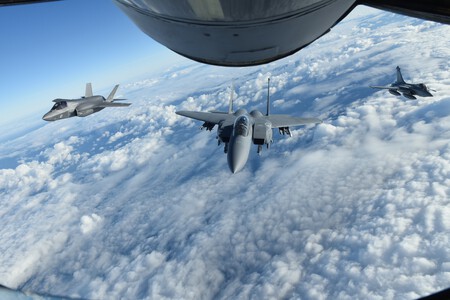
Despite the relatively low technical severity of the recent failures, they have provided ample fodder for propaganda from nations like China and Russia. Commentators , especially those in China, have been quick to leverage these incidents to question the UK’s capacity to maintain advanced military capabilities during extended deployments. Media accounts have noted how the HMS Prince of Wales is seemingly “ collecting emergency landings like souvenirs,” showcasing the vulnerabilities associated with Western military technology .
Social media has amplified the mockery, with accounts humorously questioning the F-35’s reputation , stating comments like, “World’s Best Jet… Really?” This rapid spread of disbelief reflects a modern landscape where misinformation and ridicule can quickly overwhelm factual reporting, especially regarding military capabilities.

Kerala also took the opportunity to “promote” the situation of the hunt stranded for a month
Informative War
The F-35 crisis reflects a pattern whereby media attacks target high-profile weapon systems from Western powers. For instance, Chinese media campaigns have previously capitalized on operational failures of the Dassault Rafale and Russian Su-57 fighters. Such incidents provide opportunities for geopolitical rivals to propagate narratives of technological weaknesses , further complicating international relations in defense sectors.
These dynamics underscore the importance of narrative control in the modern digital environment, where careless amplification of isolated incidents can undermine public confidence in advanced military technologies.
Impact for Lockheed Martin
As mentioned earlier, the recent run of incidents adds a layer of complexity to Lockheed Martin’s ongoing battle for public perception and viability. Recent decisions by countries like Spain and Switzerland to explore alternatives have compounded the issues surrounding the F-35’s viability, offering space for doubts to manifest in the global market.
While public perception may suffer due to these latest incidents, the F-35 program still enjoys a robust standing in allied forces, primarily due to significant investments in interoperability and strong political backing. The immediate focus now is to expedite the operational reincorporation of the grounded F-35B into service. Lockheed Martin aims to present these isolated failures as non-structural, thereby mitigating any long-term reputational damage.

Strategic Implications
Beyond the immediate impacts on Lockheed Martin’s reputation, these incidents pose significant questions about the UK’s military capacity for long-distance deployments utilizing advanced technologies. The ongoing deployment in the Indo-Pacific, only the second of its kind in the 21st century, aims to bolster alliances and assert presence in an increasingly competitive region dominated by China’s rise.
However, incidents like these can be perceived by both allies and adversaries as indicative of operational vulnerabilities . Such perceptions may undermine the deterrent impact of missions, allowing competing powers to frame each breakdown as a testament to the structural limitations of Western military capabilities.
In conclusion, as Lockheed Martin navigates this turbulent period, it becomes crucial for the company to engage in effective narrative management while addressing operational inefficiencies. The long-term health of the F-35 program and its reputation in the global military market hangs in the balance, making strategic communication and swift operational resolutions imperative.