
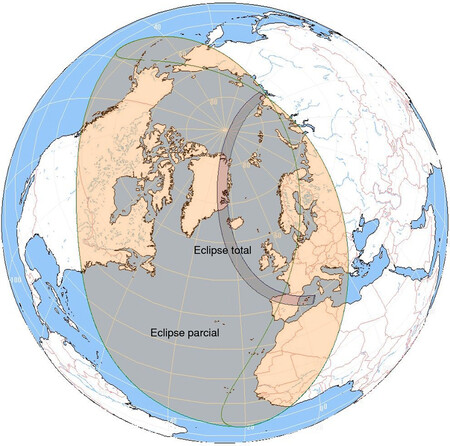
For sky watchers, the summer of 2026 brings a thrilling opportunity: the total solar eclipse on August 12, marking a historic moment as the first total eclipse visible from the peninsula since 1912. This celestial event aligns perfectly with the classic Perseid meteor shower, making it an essential time for astronomy enthusiasts.
Choosing the Perfect Viewing Spot
As the date approaches, finding a location free from light pollution becomes crucial. Astrotourists should aim for areas with minimal artificial light to fully experience the solar eclipse’s magnificence. While the eclipse’s totality is dependent on your location, many will likely seek out retreats designed for optimal viewing. The ideal spot will not just be free of city lights, but also clear of buildings or tall trees that could obstruct the view.
How to Enhance Your Viewing Experience
To enjoy the eclipse in its full glory, consider factors like the duration of totality and the potential effects of shadows in your chosen spot. Local climate conditions may also play a role, so it’s wise to check the weather forecast as the date approaches.
Where to See the Total Solar Eclipse: An Interactive Map
The total eclipse path will sweep across a broad area, including the Arctic Ocean, northeast Greenland, western Iceland, and the Iberian Peninsula. According to detailed predictions, the eclipse will reach its maximum at 19:46 PM peninsular time, lasting up to 2 minutes and 18 seconds in prime locations near Iceland. Users can visit the National Geographic Institute’s website for more information about visibility in specific areas.
The Trail of Totality
In Spain, the total eclipse will cross the Iberian Peninsula from west to east, traversing major cities such as A Coruña, Oviedo, León, and Zaragoza. Here, the maximum eclipse time will occur around 8:28 PM, offering up to 1 minute and 50 seconds of total darkness at the Asturian coast, the location with the longest duration of totality.
While cities like Madrid and Barcelona will experience an impressive 99% partial eclipse, they will not fall within the optimal viewing zone of totality. Enthusiasts in these cities should use resources like the interactive map by IGN to visualize the eclipse’s progress and decide whether travel is warranted.
Maximizing Your Viewing Conditions
For more accurate information tailored to specific locations, utilize tools that allow entry of addresses or city names. These tools provide comprehensive data, including when the eclipse starts, its peak, and how long it lasts. On the map, you can also activate layers showing factors like obscuration and visibility, assisting you in choosing a site less impacted by surrounding terrain.
On eclipse day, the timing will coincide with sunset. Hence, selecting a location with an unobstructed view to the west is essential. Remember to view the eclipse safely; do not look directly at the sun unless it’s during totality. Protective glasses are a must to avoid severe eye damage.
For an experience of a lifetime, prepare in advance for this rare astronomical event, embrace the wonder of the universe, and enjoy a spectacular celestial display that many will talk about for generations. Don’t miss out!