
California’s Renewable Revolution: A Model for the Future
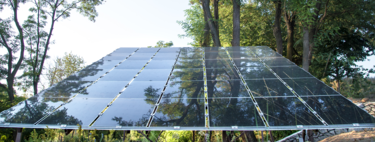
In an era where climate change concerns dominate global discussions, California stands out as a beacon of hope. Despite the political turmoil surrounding Donald Trump’s presidency, California has managed to defy expectations by demonstrating that renewable energy can effectively replace traditional fossil fuels. The state’s impressive transition is powered by a combination of photovoltaic solar, strategic battery storage, and meticulous demand management. As a consequence, California is rapidly reducing its reliance on natural gas, which has long been the primary energy source during peak evening hours.
The Battery Game-Changer
At the heart of California’s energy revolution are batteries. Recent data from Ember reveals a staggering 18% increase in solar generation compared to the previous year, while battery discharges surged by 63%. This innovative approach now allows batteries to supply up to a third of the maximum nighttime energy demand. The consequences have been dramatic: gas plant production has plummeted by 25% in just one year and 43% over two years.
During the summer months, California showcased its prowess by meeting the entire electricity demand for 41 of the last 49 days solely through renewable sources such as solar, wind, and hydroelectric power. In some instances, renewable energy production exceeded 140% of the total demand, with excess energy being exported to neighboring states. This groundbreaking achievement speaks volumes about California’s dedication to a sustainable future.
The Secret Ingredient: Capacity
The remarkable transformation of California’s energy landscape can be encapsulated in one word: capacity. In just four years, the state ramped up its battery storage capacity from 0.6 GW in 2020 to an astonishing 11.7 GW by 2024, which is almost half of the entire National Park’s energy portfolio. Remarkably, in 2024, California installed more storage capacity (3.8 GW) than it did large-scale solar (2.5 GW). This is indicative of a significant shift in priorities as outlined in an Ember report.
However, it’s essential to note that the success isn’t solely hardware-based. The California Independent System Operator (CAISO) enables batteries to participate actively in the energy market. By utilizing cheap energy to charge batteries when supply is abundant, and discharging energy during high demand hours, the system effectively replaces gas turbines that previously dominated peak hours.
Local Initiatives Boosting Renewable Energy
Two pivotal factors contribute to California’s success story. Firstly, solar rooftops now generate approximately 13% of the state’s total electricity, reducing daytime demand on the grid. When combined with domestic batteries, this also helps alleviate nighttime energy requirements. Secondly, the Demand-Side Grid-Sport (DSGS) initiative has become one of the largest power plants globally, comprising more than 200 MW of operational capacity and 720 MW from customer-owned batteries. Throughout the summer of 2024, the DSGS was activated 16 times during heat waves, validating its stabilizing effect on the grid.
However, the future of these initiatives appears uncertain. The state’s budget deficit and an impending $18 million cut threaten both the DSGS and the Microgrid Programs, raising concerns in the renewable energy community.
Consumer Impact: Lower Prices
The most immediate advantage for consumers has been a notable decrease in energy prices. The reliance on renewables has substantially driven down wholesale costs, with spot prices falling by 53% year-on-year. Many midday segments even recorded negative prices, largely due to batteries absorbing 15% of demand during these hours. According to Professor Mark Jacobson, transitioning to complete electrification could save consumers between 60% and 65% on their annual energy bills compared to traditional fossil-fuel models.
Challenges Remain
Despite the apparent successes, California is not without its challenges. The state still grapples with the sustainability of demand response programs, which heavily rely on public funding that is not guaranteed. Additionally, further investment in flexibility is crucial. As pointed out in a Stanford study by Jacobson, moving hydroelectric power to nighttime use, accelerating offshore wind developments, and enhancing demand management are all critical future steps.
Spain: A Contrasting Narrative
While California is winning its battle against gas dependency, Spain is experiencing the opposite issue. The nation produces more renewable energy than ever, yet it struggles to utilize it effectively. Following a significant blackout on April 28, 2025, Spain’s grid operator activated stricter operational protocols, prioritizing combined cycle power plants. The challenges stem not from a lack of renewable resources, but from insufficient storage and flexibility.
In response to these challenges, the Spanish government introduced the Royal Decree-Law 7/2025, which allows for capacity markets to ensure that firm technologies are available when needed. However, these measures are merely temporary fixes. Structural solutions involving batteries, hydraulic storage, microgrids, and enhanced demand management are necessary and may take until 2026 to implement fully.
The paths of California and Spain illustrate a fundamental lesson: the transition to renewable energy is complex and varies by region. California serves as a compelling example of how strategic investments in renewable technologies can lead to substantial changes. In contrast, Spain emphasizes the necessity of flexible infrastructure to enable renewable sources to effectively sustain the energy grid.