
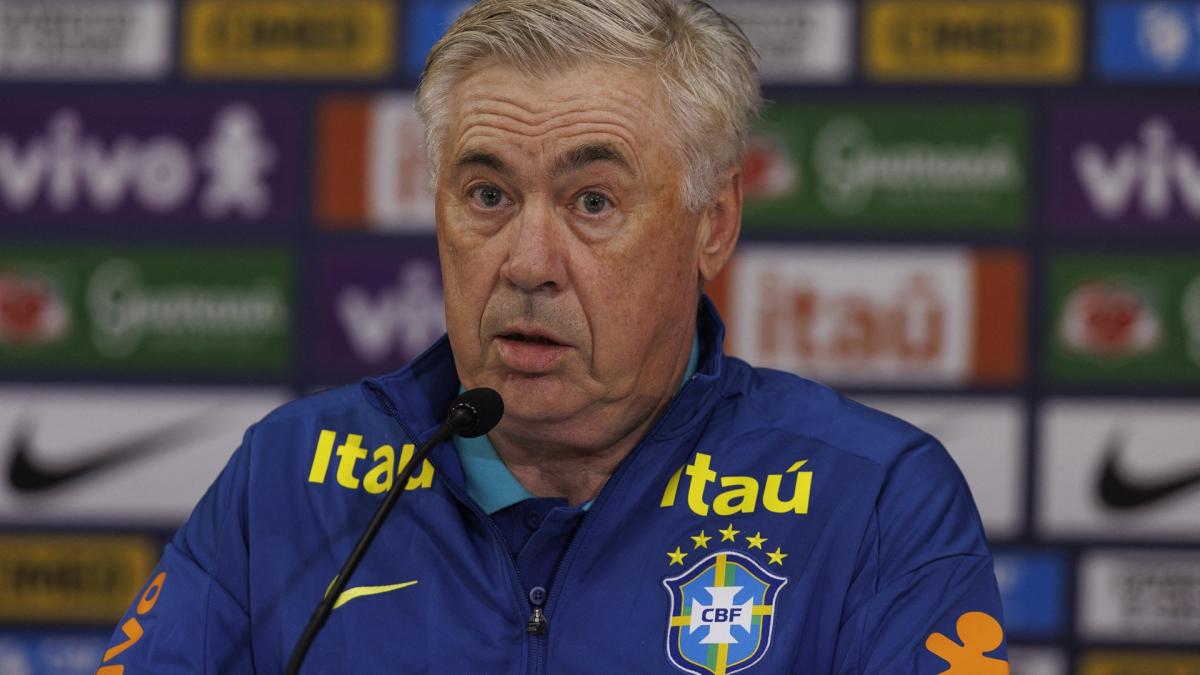
## Woes of Carlo Ancelotti with Brazil’s National Team
Before the World Cup began, Brazil faced a series of setbacks that took a toll on their chances. The withdrawal of key players like Eder Militão, Rodrygo, and Estêvão left the squad weakened. Fans held onto hope for a resurgent performance from Neymar, the 34-year-old star plagued by injuries. Despite these aspirations, Brazil entered the tournament as underdogs, and expectations were cautiously low.
### The Disastrous Performance Against Norway
The atmosphere of unease surrounding the Brazilian national team was amplified when Neymar’s name was announced amidst whispers of doubt. Coach Carlo Ancelotti opted for limited minutes with his star player, utilizing Neymar only twice for a mere 37 minutes on the pitch. The Canarinha’s early exit in the round of 16, at the hands of Norway and its young, formidable squad, did little to inspire confidence.
Brazil’s third-place finish in the South American qualifiers further highlighted the team’s decline. Instead of revitalizing the national team, Ancelotti’s arrival seemingly perpetuated the dismal trajectory, as Brazil stumbled at the first major hurdle in the World Cup.
### Criticism from Legends of Brazilian Football
In the wake of Brazil’s quick exit, criticism has flowed in, notably from 1994 World Cup champion Romario. He didn’t hold back his disappointment, suggesting that Ancelotti’s contract should be torn up immediately post-game, stating that the team’s shameful performance warranted drastic action. Romario lamented a pattern in Brazilian football where coaches remain too long despite poor results, saying, “This can’t go on like this, damn it!”
### Divided Opinions: Player Support vs. Media Scrutiny
While criticism has been fierce, not all voices are against Ancelotti. Former national coach Vanderlei Luxemburgo noted that had Ancelotti been Brazilian, calls for his dismissal would have been rampant. He stressed the uniqueness of Neymar’s talent, suggesting that the team should rally around such a player.
However, not even the players’ support could protect Ancelotti from media scrutiny. Publications like GZH questioned whether Ancelotti was being directed by figures within the Brazilian Football Confederation (CBF). They pointed out the team’s poor performance metrics, notably the meager 34% possession against Norway, deeming it unacceptable for a nation with Brazil’s rich footballing heritage.
### Financial Implications of Dismissal
Despite the national sentiment swinging against him, Ancelotti’s position is not immediately at risk. Dismissing him would come at a high cost, with a contract that runs until 2030 and an estimated annual salary of €10 million. The financial burden of firing him may force the CBF to reconsider as they balance the need for stability against the uproar from fans and analysts.
The players have also weighed in, seeking assurance that Ancelotti should be allowed time to cultivate a new generation, focusing on emerging talents like Endrick, Rayan, Estêvão, and the impactful Vinicius Júnior. This plea for continuity reflects a desire for a more profound transformation rather than a quick fix.
In conclusion, while Carlo Ancelotti’s tenure as Brazil’s coach seems precarious, a blend of criticism and player support creates a complex landscape for the national team moving forward. The Brazilian footballing community finds itself at a crossroads, grappling with the need for immediate success while nurturing future talent.