
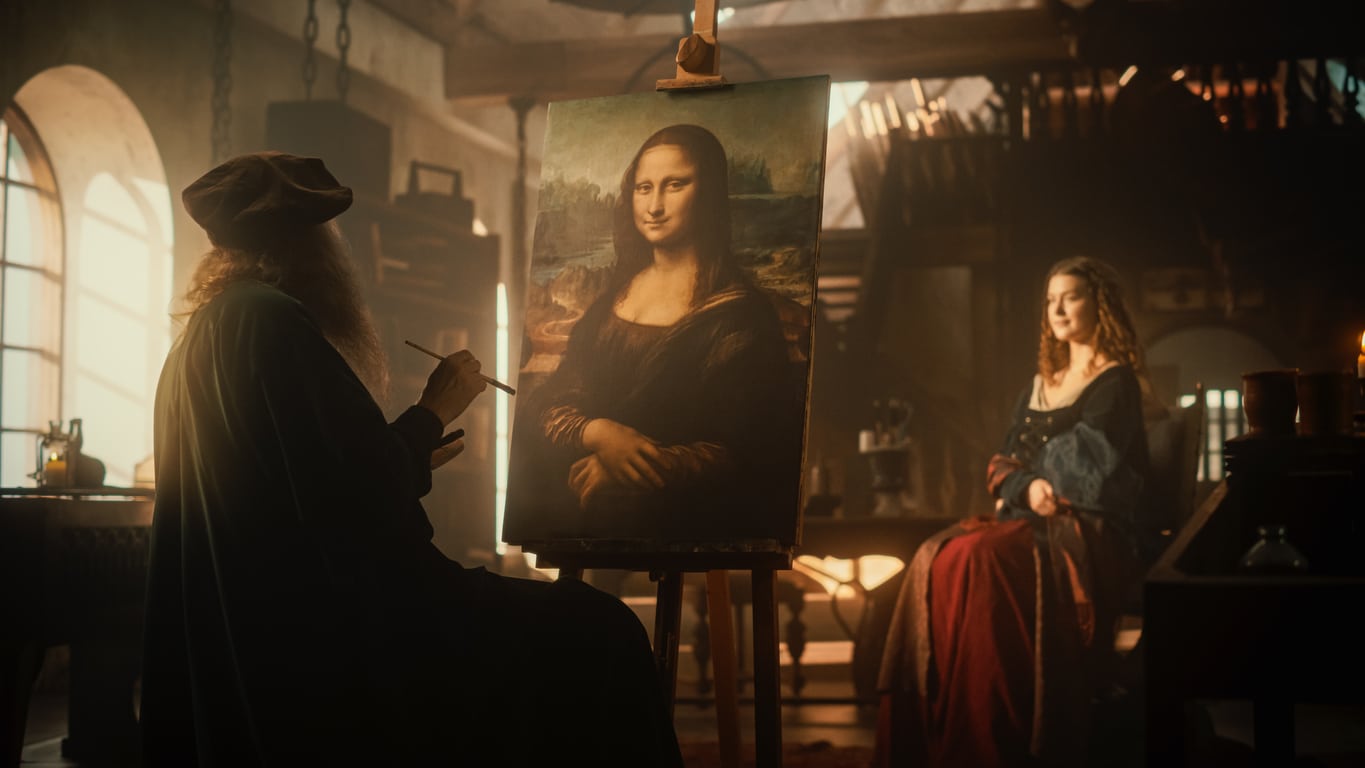
More than 500 years after his death, Leonardo da Vinci continues to captivate the world. Recently, an ambitious team of international researchers has embarked on a scientific project aimed at recovering his DNA to better understand the biological origins of his genius.
This initiative, dubbed Leonardo DNA , combines genealogy , genetics , art history , and molecular biology . It is spearheaded by a collaboration between historians and scientists, aiming to reconstruct Leonardo’s genetic profile through a unique blend of documentary research, modern DNA analysis, and potentially, examinations of his biological remains in the future.
The Long-Standing Genealogical Investigation
At the heart of this project are two Italian historians, Alessandro Vezzosi and Agnese Sabato , who have spent over 30 years working to reconstruct Leonardo’s family tree. Their meticulous research has identified more than 400 individuals spanning 21 generations , tracing back to 1331 . Among these, they have discovered 15 living male descendants .
Why focus primarily on male descendants? This is because the Y chromosome , passed down almost unchanged from father to son, allows for verification of a male lineage’s continuity. Genetic tests conducted on six of these descendants have revealed that they share specific segments of the Y chromosome, suggesting a direct lineage with Leonardo’s family.
However, this does not imply that they are direct descendants of Leonardo himself—since he never had children—but rather that they are descendants of his father or half-brothers. Nevertheless, this finding provides enough groundwork to attempt reconstructing his genetic profile.
What DNA Could Reveal
The researchers are now hopeful that they can compare this familial DNA with possible fragments of Leonardo’s own DNA. These fragments could potentially come from cells collected from objects he touched or, eventually, a study of his remains, pending their location and legal access.
The goal is not to “resurrect” Leonardo, but rather to gain insight into the biological foundations of some of his unique characteristics. This approach could help explain—at least in part—his remarkable visual acuity, overflowing creativity, notorious left-handedness, and even certain modern medical hypotheses suggesting neurodevelopmental disorders like dyslexia or ADHD .
Ultimately, this quest may also provide insights into his general health and even the causes of his death, which remain uncertain.
Credit: iStock
Crédit: JanakaMaharageDharmasena/istock
A Scribbled Chimera in a Fireplace
During their research, the authors of the project made an unexpected discovery in Vinci , Leonardo’s birthplace. A charcoal drawing of a fantastical creature—dubbed the “Unicorn Dragon”—was found on the inner wall of an ancient fireplace.
According to specialists, this drawing could be a youthful work of Leonardo. The style and motifs resemble some of his sketches dated back to the 1470s . The artwork is currently undergoing analysis and restoration.
A Bridge Between Science and Humanity
Beyond the technical advances, the Leonardo DNA project opens up a broader reflection on the ties between biology , history , and culture . As Agnese Sabato explains, Leonardo already questioned the origins of human life—not just in biological terms, but also philosophically and artistically. His approach to human nature, blending science and emotion, anticipates contemporary debates surrounding genetics, heritage, and identity.
This project is therefore not limited to a mere exercise of curiosity. It redefines the contours of what science can teach us about great historical figures, bringing together ancient archives, modern biology, and intellectual ambitions. Leonardo da Vinci, one of the most brilliant minds in history, may become the first historical figure with a partially reconstructed genetic heritage, marking a significant step toward understanding not just his genius but also the mysteries humanity continues to bear.