
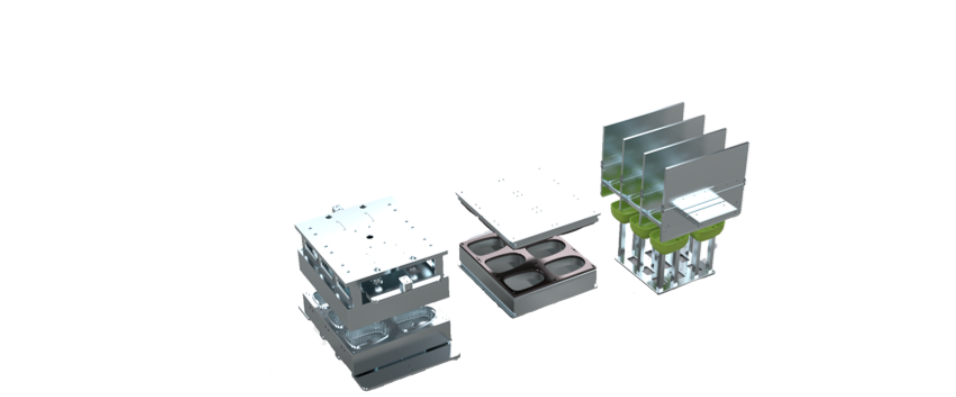
What is a Thermoforming Mould / Thermoforming Mold?
A Thermoforming Mould (or Thermoforming Mold) is a precision-engineered tool used to create consistent and repeatable shapes from plastic sheets. In the thermoforming process, a plastic sheet is heated until it becomes pliable, then it is stretched over or into the mould, where it takes the desired shape. Once cooled, the plastic retains that shape, creating a durable and uniform product.
Thermoforming moulds are widely used across various industries, including:
Packaging – trays, clamshells, and blister packs
Automotive – dashboards, panels, and interior components
Medical – sterile packaging and device casings
Food industry – containers, lids, and disposable products
Types of Thermoforming Moulds / Thermoforming Molds
There are two primary types of Thermoforming Moulds:
Male Mould (Positive Mould) – The heated plastic sheet is draped over the mould. This method is often used when a smooth outer surface is needed.
Female Mould (Negative Mould) – The plastic sheet is drawn into the mould cavity. This is ideal for products where precise detailing is required.
Some advanced moulds also combine both techniques for hybrid forming, allowing manufacturers to achieve complex shapes and high precision.
Materials Used for Thermoforming Moulds / Thermoforming Molds
The choice of material for a Thermoforming Mould depends on the production scale, cost considerations, and the level of detail needed:
Aluminum – Durable, lightweight, and excellent for mass production.
Wood – Cost-effective for prototyping and small runs.
Epoxy or Resin – Good for medium-volume production with moderate costs.
Steel – Heavy-duty option for high-volume, long-lasting moulds.
Advantages of Using High-Quality Thermoforming Moulds / Thermoforming Molds
Investing in a well-designed Thermoforming Mould offers several benefits:
Precision and Consistency – Ensures every product has identical dimensions.
Durability – High-quality moulds can withstand thousands of cycles.
Efficiency – Reduces waste and speeds up production.
Versatility – Suitable for a wide range of plastic materials, including PET, PVC, ABS, and polypropylene.
Design Considerations for Thermoforming Moulds / Thermoforming Molds
Designing an effective Thermoforming Mold involves several key factors:
Draft Angles – Slight angles are included to make it easier to remove the formed part from the mould.
Venting – Tiny vents allow trapped air to escape, preventing defects.
Texture and Finish – Surface treatments can add gloss, matte, or patterned finishes to the final product.
Tolerance Levels – Critical for parts that must fit together perfectly.
Thermoforming Mould vs. Injection Mould
While both thermoforming and injection moulding involve shaping plastic, the processes differ significantly. Injection moulding involves injecting molten plastic into a closed mould, which is ideal for small, complex parts. Thermoforming, on the other hand, is generally more cost-effective for larger parts with thinner walls, making Thermoforming Moulds essential for packaging and other lightweight applications. Whether you refer to it as a Thermoforming Mould or Thermoforming Mold, this tool is a cornerstone of modern plastic manufacturing. Choosing the right mould material, design, and type can dramatically improve production quality, reduce costs, and enhance product functionality. As industries continue to seek efficient, sustainable, and versatile manufacturing methods, the role of thermoforming moulds remains more crucial than ever.