
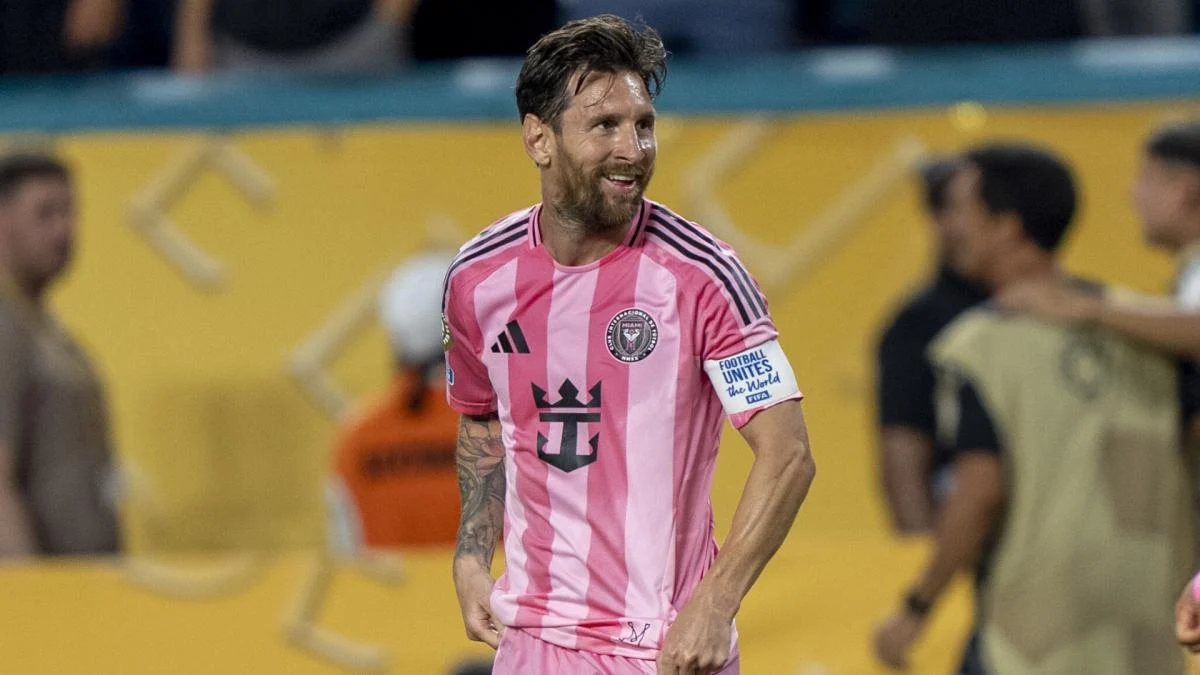
The Journey of Lionel Messi: From PSG to Inter Miami
In the world of football , few players capture the imagination like Lionel Messi . His journey took a pivotal turn during the summer of 2023 when his contract with Paris Saint-Germain (PSG) ended. Messi found himself courted by three major clubs: Inter Miami , FC Barcelona , and Al-Hilal from Saudi Arabia. While Barcelona was the team close to his heart, their financial struggles prevented his return. On the other hand, Al-Hilal, while financially generous, did not have the backing of Messi’s wife, leading the superstar to choose Inter Miami as his new home.
Since then, Messi has embraced life in Florida , joined by familiar faces like Jordi Alba , Sergio Busquets , and recently, Rodrigo de Paul . Together, these players have aimed to redefine the image of football in the Major League Soccer (MLS).
Challenges and Triumphs in MLS
Despite the excitement surrounding his arrival, Messi’s tenure hasn’t been without its challenges. Recently, Major League Soccer suspended a match that involved not only Messi but also his friend Alba for skipping the All-Star Game . This decision raised eyebrows and concerns, primarily voiced by Jorge Mas , the majority shareholder of Inter Miami. He expressed worry that such incidents could affect Messi’s perception of the league and its regulatory environment.
As Messi approaches the end of his current contract, set to expire on December 31, 2025 , there are whispers in the football community about his potential plans. Media outlets like ESPN Argentina suggested that Messi may be aiming to transition to a higher-caliber club to better prepare for the 2026 FIFA World Cup —a tournament many believe will be his last with the Argentina national team .
The Future: A Longer Stay in Miami?
However, in a twist to the narrative, reports from Marca indicated that Messi prefers to remain with Inter Miami longer than many anticipated. His commitment to winning the MLS championship and inaugurating the new stadium has solidified his intentions. Sources within the team spoke of ongoing discussions between Messi’s camp and Inter Miami’s leaders. These discussions suggest they are keen to continue their relationship, with hopes of building a winning team together.
New information from Catalunya Radio recently suggested that Messi is indeed preparing to extend his contract until 2028 . Should this contract come to fruition, it would see him play until he is 41 years old . Interestingly, this contract could be structured to allow either party the option to terminate it, but if all goes according to plan, Messi and Inter Miami would continue their journey together until the end of the decade.
What This Means for Messi and MLS
The implications of this potential extension are significant. Not only does it reflect Messi’s comfort in the U.S., but it also highlights the growing stature of MLS on the global football stage. His decision to stay in Miami for an extended period could draw more international talent to the league, making it an attractive prospect for players looking to combine a competitive football environment with a vibrant lifestyle.
Additionally, Messi’s presence in the league is likely to spark increased interest from sponsors, viewers, and young aspiring athletes, further transforming the landscape of American soccer. The combination of Messi’s stardom and the unique cultural dynamics of Miami creates a narrative that resonates with football fans globally.
While challenges remain, the partnership between Lionel Messi and Inter Miami appears to be one filled with promise. As the football world watches closely, fans are left to wonder what the future holds for Messi in the United States. His impact—both on and off the pitch—will undoubtedly be felt for years to come.
As we anticipate formal announcements regarding Messi’s future, it’s clear that his legacy extends far beyond the pitch, intertwining with the growth of soccer in America. With plans to remain in Miami until 2028, Messi may continue to inspire a new generation while cementing his place not just in football history, but also as a key figure in the evolution of Major League Soccer.