

Starship: The Future of Military Logistics
Starship has become synonymous with humanity’s ambition to reach Mars, but its capabilities caught the attention of the Pentagon for more terrestrial purposes: transporting military supplies rapidly and efficiently. As years passed, SpaceX faced an unexpected challenge that jeopardized these ambitious plans.
Revolutionizing Military Logistics
The year 2024 marked a pivotal moment in space exploration and military logistics. A remarkable incident showcased the precision of the starship propeller rocket; it was intercepted with millimeter accuracy by a mechanical arm. This seemingly minor event is groundbreaking, as it signifies a shift from disposable rockets to reusable ones, potentially reducing costs and shortening mission timelines .
Before this achievement, the Pentagon had already expressed interest in SpaceX’s capabilities as early as 2021. The United States Air Force initiated an internal program called ‘Rocket Position’, aiming to move significant military supplies from one location to another on Earth within minutes—a goal that sounds simple yet holds immense strategic significance.
The Challenge of Logistics
Imagine the capability to deliver up to 150 tons of military cargo globally within a 90-minute window. This unprecedented logistical versatility could provide a substantial strategic advantage. However, realizing this dream necessitates more than just theoretical claims; it requires tangible proof of SpaceX’s capabilities. As part of their plans, the Air Force intended to test these rockets on a Pacific Atoll —but unexpected obstacles arose.
Reports from Reuters indicate that at least 14 species of tropical birds inhabit Johnston Atoll, located 1,300 kilometers southwest of Hawaii. Biologists warned that testing conducted by SpaceX and the Air Force could jeopardize these vulnerable species, thus prompting a reconsideration of the test site.
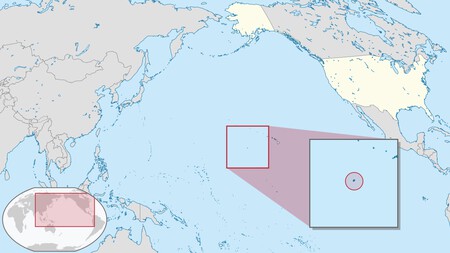
Atoll location
Relocation Efforts
Johnston Atoll, encompassing only 2.6 square kilometers, is part of the National Marine Monument of the remote Pacific Islands. Due to environmental concerns, a source from the Air Force told the American military publication ‘Stars and Stripes’ that they would need to find a new testing ground. According to the spokesperson, efforts are already underway to identify alternative locations for the program.
Environmental Concerns
This isn’t the first time that SpaceX’s operations have raised environmental alarms. In 2023, an explosion during a launch in Boca Chica, Texas, resulted not only in destruction but also endangered local bird species, igniting legal disputes for the company. Responding in his typically unconventional manner, Elon Musk humorously remarked that he would forgo tortillas for a week to “compensate” for the harm caused.
The current situation represents a significant win for the tropical birds of Johnston Atoll . Historically, these atolls have suffered immense environmental damage. During the Cold War, they were targeted for nuclear tests , leading to catastrophic consequences for local flora and fauna and instilling fear of nuclear radiation even before the Chernobyl disaster.
Images | United States Army Chemical Materials Agency, Steve Jurvetson, Tubs
As SpaceX continues to explore innovative solutions for military logistics, they face the delicate balance of fulfilling pressing needs while safeguarding the environment. This struggle underscores the complexities behind merging advanced technology with ecological preservation, shaping the future of both space exploration and military operations.