
The Rise of False Gurus in the Digital Age
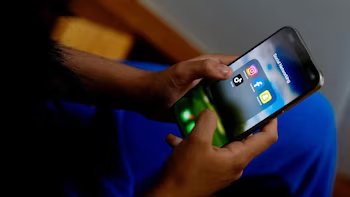
The phenomenon of influencers and self-taught experts has become deeply ingrained in the global digital landscape. A recent analysis by Trinity Business School in Ireland and NEOMA Business School in France reveals that users are prone to forming strong opinions on unfamiliar subjects after only brief exposure to content on social media. Alarmingly, this often occurs without the ability to discern between true and false information.
Impact of Minimal Exposure
Findings from the study indicate that merely three to five posts can lead individuals to adopt nearly unchangeable viewpoints. This research, grounded in experiments with American participants, demonstrates that the speed at which opinions form is closely tied to the trust placed in specific public figures and the perceived coherence of their messages.
The Trust Dynamics of Information Sources
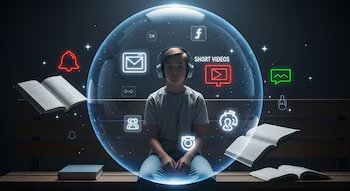
The study identifies the famous expert as the most trusted source of information for users. According to Ashish Kumar Jha, a professor at Trinity Business School, when a prominent figure, like a doctor or political advisor, possesses a large following, people are more likely to accept their claims. Following this, celebrities also rank high as reliable sources, leaving those who lack formal qualifications at a disadvantage.
The Low Bar for Expertise
One concerning aspect highlighted in the study is the low threshold for being perceived as an expert. In today’s digital world, anyone can claim significant titles such as “doctor” or “teacher” without legitimate credentials. This phenomenon became especially evident during the early months of the COVID-19 pandemic when many users falsely identified themselves as health experts.
The Longevity of Initial Opinions
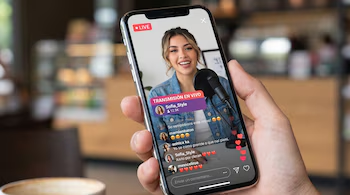
Initial impressions about a topic often endure, persisting long after the first encounter. The study found that users are inclined to engage more with content that reinforces their existing beliefs, while they tend to dismiss contradictory information. This tendency highlights a psychological mechanism that reinforces resistance to belief changes and encourages the spread of unverified claims.
The Role of Social Networks
The report emphasizes that the rise of false gurus is closely linked to the shift in information consumption towards social media and video platforms. According to the Reuters Digital News Report 2026, these platforms now serve as primary sources for news consumption globally.
The decline in trust in traditional media has led users to seek alternative information sources, facilitating the rise of individuals with questionable credentials. As highlighted in the study, there’s an urgent need for robust strategies to combat digital misinformation and address the perils of a landscape where informational authority is determined by popularity rather than truth.