
The Rise of AI Wearables: Beyond Smartphones
Over the last decade, wearables have been closely linked to health care and sports, emerging as convenient tools for tracking fitness and well-being. However, by 2025, a transformation is underway, with an increasing number of companies innovating to position wearables as vehicles for artificial intelligence (AI). Tech leaders like Elon Musk and Bill Gates have suggested that mobile phones may soon become obsolete, paving the way for these sophisticated wearables that, while still developing, offer immense potential.
Chasing the Next Big Thing
The tech industry has been in search of a mass-market hardware successor to the smartphone for almost two decades. Smart glasses seem poised to take the lead, yet they are just one among many initiatives. The real challenge now is to create devices that fulfill needs that remain largely undefined, as the smartphone has set a very high benchmark. Smartwatches, for instance, have yet to challenge the dominance of smartphones effectively.
AI-Driven Glasses: The Contenders
Smart glasses are currently the frontrunners in this race. At CES 2025, we witnessed the unveiling of several ‘smart’ glasses—now dubbed ‘AI glasses’—that promise immersive, hands-free experiences. Meta has taken a considerable step forward in marketing its product, with Mark Zuckerberg asserting that glasses are the ideal platform for AI, signifying a decisive shift toward this new technological frontier.
These AI glasses enable multimodal interactions by incorporating visual and audio capabilities through advanced lenses, microphones, and speakers. They are designed for all-day wear, aiming to seamlessly integrate AI interactions into daily life.
Diverse Wearable Options on the Horizon
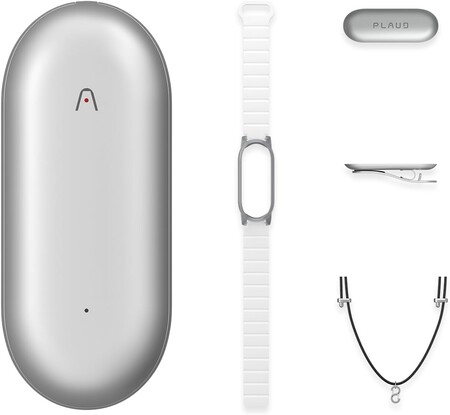
Not limited to glasses, the spectrum of AI wearables also includes innovative devices like the Bee AI bracelet and various pendants, such as the LimitLess and the Stream Ring. The Plaud NotePin, a versatile gadget that can be worn as a wristband, neckpiece, or pin, exemplifies this emerging category. Major companies have started to invest heavily in these developments, with Amazon acquiring Bee AI and Meta securing its stake in LimitLess—indicating a clear shift in focus from traditional smartphones.
Integration with Existing Devices
AI is not just a standalone feature in new wearables; it is increasingly integrated into existing gadgets. For example, Samsung and Google have incorporated Gemini AI into their WearOS watches, while Garmin offers premium AI-driven analytics for its devices. Fitbit is experimenting with AI coaching, and Apple has introduced AI translation capabilities for its AirPods. Even Oura rings are utilizing AI to enhance user experience.
The Future: Data Collection and User Experience
AI glasses and wearables are inherently designed for continuous use, which allows them to gather extensive user data. This data-rich environment is crucial for AI assistants to deliver meaningful insights and services. The question remains: will these devices surpass the smartphone in popularity? While uncertainties linger, one fact stands clear: there is a fierce competition among big tech companies to dominate the AI landscape, and wearables are seen as a key avenue for deployment.
As we venture further into this new era of technology, the implications of such advancements remain both exciting and daunting. With AI wearables beginning to capture the imagination, they undoubtedly signal a synergistic fusion of technology and human experience.