
The Iberian Trio of Eclipses: Baily’s Pearls Explained
On August 12, astronomy enthusiasts will witness the first of three eclipses in the Iberian trio. As many prepare to travel to optimal viewing locations within the zone of totality, it’s an exciting time for both seasoned eclipse watchers and newcomers. People typically fall into two groups: those who approach the event with an open mind and minimal expectations, and those who delve deeply into the science behind it. If you’re part of the second group and have sought information on Baily’s pearls, you’re in for an intriguing revelation.
Pearls that Illuminate the Sun
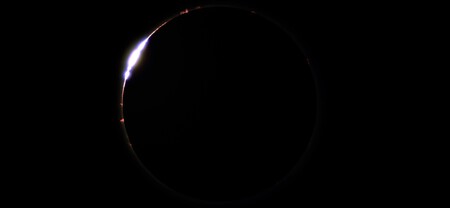
A total solar eclipse happens when the Moon aligns perfectly between the Earth and the Sun, blocking the latter’s light. However, as the Moon begins to cover the Sun and subsequently reveals it once again, a fascinating phenomenon known as Baily’s pearls occurs. These “pearls” appear as shimmering beads along the lunar silhouette, caused by the Moon’s uneven surface of valleys, craters, and imperfections. When sunlight filters through these lunar features, it creates a visually stunning spectacle visible from Earth.
The Origin of the Name
Baily’s pearls are named after British astronomer Francis Baily, who described them for the first time in 1836 during an annular eclipse. His observations revealed the unique optical effects created by the lunar topography, setting the stage for future generations of eclipse observers.
The Significance of Baily’s Pearls During an Eclipse
Beyond their aesthetic charm, Baily’s pearls serve a practical purpose. They mark the beginning and end of totality during a solar eclipse. Initially, they appear when the Moon obscures a significant part of the Sun, and they vanish completely as the Sun is entirely covered, rendering it safe to look directly without protective eyewear. They reemerge as the Sun becomes visible once again, serving as an essential visual cue for spectators.
Safety is paramount during solar eclipses. Viewers should only look directly at the Sun without protective glasses during totality. The moment sunlight begins to peek out again, it’s crucial to resume using protective eyewear. Some innovative locations in Spain, like Lerín, have introduced bells to signal different phases of the eclipse, enhancing the overall experience for attendees.
Witnessing Other Eclipses
Baily’s pearls are not exclusive to total solar eclipses; they can also be observed during annular solar eclipses. When the Moon partially covers the Sun, the characteristic “ring of fire” forms, providing another opportunity to see these delightful pearls. Consequently, observers will have the unique experience of witnessing Baily’s pearls during all three eclipses in the Iberian trio—the first two being total eclipses and the last one an annular eclipse.
As the date approaches, excitement builds for this astronomical event. With proper planning, safety measures, and a keen eye for those sparkling Baily’s pearls, you’re set for a truly memorable experience.
Image | CTIO/NOIRLab/NSF/AURA/D. Munizaga | Brucewaters
In Xataka | A third of Spain will be completely dark for a minute or two. The astronomical event of the century is approaching.