
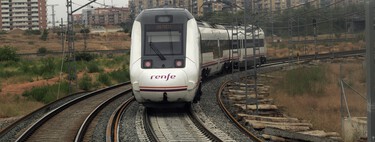
Renfe’s Latest Investment in Talgo’s Avril Trains: A Costly Revision
Renfe has reached an agreement with Talgo to reform the Avrils, a move described as a band-aid for ongoing issues. This information emerges from The Economist and Europa Press, highlighting how the Avrils have drained Renfe’s financial resources. The railway company has sought solutions for months, ultimately deciding to invest even more money into their troubled trains.
The Financial Deal
As reported by The Economist, the agreement, pending board approval from both parties, may cost Renfe an additional 132 million euros. This investment will transform 15 fixed-gauge Avril trains into variable-gauge vehicles, enabling them to travel on standard gauge tracks, like the Madrid-Barcelona line, and Iberian gauge tracks, such as the high-speed sections between Madrid and Galicia. However, this decision sacrifices their potential use in France, a significant loss considering the earlier hopes for broader reach.
Compensation and Future Prospects
The contract also holds Talgo accountable for compensating Renfe with 116 million euros due to delivery delays. Furthermore, Talgo will cover the 10.8 million euros required for the homologation of the new variable-gauge trains. This compensation structure aims to alleviate the financial hit Renfe has suffered over the years.
The Promise of Variable Gauge
Initially, when Renfe ordered the Talgo S106, also known as the Avril, the promise of variable gauge capability was a key selling point. This feature would allow the trains to seamlessly navigate between the standard gauge tracks in Europe and the unique Iberian gauge, a distinct characteristic of Spain’s rail system.
Challenges from Day One
Despite the touted advantages, the Talgo Avril has proven to be problematic since its inception. Renfe has faced significant delivery delays, and some fixed-gauge trains have suffered structural damage leading to cracks. Disputes over responsibility for these issues have further strained relations between Renfe and Talgo, with accusations directed at Adif for inadequate track maintenance.
Additional concerns extend beyond structural integrity. The trains have been criticized for poor rolling quality, leading to uncomfortable journeys, and subpar interior materials. A software glitch shortly after their launch further complicated matters, culminating in more operational disruptions.
Why the Modification Now?
With ongoing challenges and aspirations to enhance the Madrid-Barcelona line, Óscar Puente, Minister of Transport, has confirmed plans to modify the route to reduce travel times to under two hours. This ambitious goal necessitates the procurement of new high-speed trains, with Siemens and Hitachi being frontrunners for the contract, potentially valued at 1.8 billion euros.
Flexibility vs. Costs
Adapting the Avril trains to variable gauge is seen as a strategic move that will provide Renfe with flexibility in operating across various track types. However, it also raises questions about whether spending an additional 132 million euros on these problematic trains is worthwhile.
With the recent investment, Renfe hopes to reposition the Avrils on Iberian gauge lines, creating alternatives for when new high-speed trains arrive. However, the reliability of these transformed trains remains uncertain.
A Lingering Nightmare
The Talgo S106, or Avril trains, have indeed become a headache for Renfe, leading to significant financial losses and operational decisions that restrict their competitive edge. The initial plans to utilize these trains for the low-cost AVLO service between Madrid and Barcelona have fallen through, ultimately impacting Renfe’s ability to compete with services like Ouigo.
In summary, while Renfe will gain operational flexibility with the conversion of these trains, it comes at a steep price for vehicles that have already underperformed in numerous aspects. As Renfe continues to seek solutions, the question remains whether this latest move will ultimately alleviate or exacerbate their challenges.