
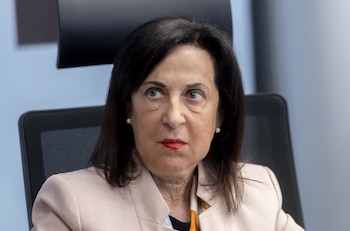
The Deputy Secretary of Education and Equality of the PP, Jaime de los Santos , has demanded explanations from the head of Defense, Margarita Robles , following her ministry’s decision to eschew the acquisition of US F-35 fighters. This announcement has raised significant eyebrows in political circles, leading to calls for clarity on the matter.
Background on the F-35 Discussion
This past Wednesday, after reports surfaced in the newspaper El País , the Ministry of Defense confirmed to Europa Press that it had ruled out acquiring the US F-35 fighter jets as part of its plan to bolster the air fleet of the Armed Forces . Instead, the ministry signaled a preference for European alternatives , such as the Eurofighter and the prospective Future Combat Air System (FCAS) .
Notably, the report revealed that Robles’s department had already initiated preliminary discussions regarding the purchase of F-35s. However, it ultimately determined that allocating 85% of funds intended for security and defense to European projects rendered the acquisition of an American model untenable for its vital combat aviation needs.
Political Responses and Implications
Given these developments, the ‘popular’ party, led by De los Santos, insists that Robles must provide thorough explanations . They argue that the government’s hesitance to clarify this issue reveals a broader reluctance to engage directly with the general courts regarding defense spending practices.
De los Santos emphasized the importance of transparency in governmental dealings, particularly about national defense strategies . “Minister Robles should clearly address the reasons behind this decision,” he stated. He also highlighted how failing to invest adequately in essential military technology could compromise Spain’s defensive capabilities .
Impacts of Tariffs on the Agricultural Sector
During his press interaction, De los Santos was also queried about the tariffs imposed by former President Donald Trump on the European Union that took effect this Thursday. Following an agreement between Trump and Ursula von der Leyen , President of the European Commission, the potential for further changes in these tariffs remains a subject of concern.
De los Santos expressed that the government’s role should now focus on providing solutions to the most vulnerable sectors, particularly the agricultural industry, which could bear the brunt of these tariffs. “What needs to be done is to protect our workers and the Spanish field,” he concluded, urging the government to prioritize the economic welfare of those most affected.
The Broader Context
Spain’s decision to forgo F-35 jets reflects a growing trend among NATO members to invest in European defense capabilities rather than relying on American hardware. This shift could redefine military cooperation and defense procurement strategies within the EU, raising questions about the future of transatlantic defense relations.
As European nations increasingly prioritize self-sufficiency in defense, the implications of this decision could resonate far beyond merely military procurement. It could potentially reshape alliances, operational capabilities, and even the geopolitical landscape of the region.
With the backdrop of ongoing global tensions and the need for a strong defensive posture , Spain’s decision could signal a pivotal moment in its approach to national and continental security. As 85% of defense funds are earmarked for European solutions, other EU nations may follow suit in reassessing their military strategies and partnerships.
The call for transparency from De los Santos and the ongoing discussions surrounding tariffs highlight the interconnectedness of politics , defense , and economics in Spain. The outcome of these debates could steer significant policy changes that affect both national security and economic stability in the years to come.
In summary, the recent development concerning the refusal to purchase F-35 fighter jets has provoked considerable political discussion in Spain. With calls for accountability and protection for vulnerable sectors of society, the potential ramifications of these decisions extend well beyond military matters, indicating a significant moment in shaping the future of Spain’s defense and economic policies.