
The Rising Tensions: Israel, Iran, and the Nuclear Threat
Recent developments in the ongoing conflict between Israel and Iran have raised significant concerns regarding nuclear safety. U.S. President Biden has indicated that the forthcoming week will be “very important” in determining the trajectory of the conflict. This statement comes as fears of a nuclear catastrophe loom, echoed even by Russia, which pointed out that “the world is merely millimeters away from a calamity.” Such warnings start to sound alarm bells around the globe.
The primary concern here revolves around the possibility of a nuclear disaster . Reports from the Financial Times have indicated that Israeli airstrikes targeting Iranian nuclear facilities have reignited fears about a potential radiological or chemical disaster in the region. Rafael Grossi, Director General of the International Atomic Energy Agency (IAEA) , labeled the situation as “deeply troubling,” warning that increased military action heightens the risk of radioactive release, which might have devastating consequences for both the population and the environment.
Currently, while there has been no significant radiological emergency , incidents such as the attack on the Natanz uranium enrichment facility have resulted in localized contamination within the site, though external environments seem unaffected, based on IAEA’s own measurements.
Radiological Contamination. Current data indicates that the detected radiation is confined within the Natanz facility and mainly consists of alpha particles. The health risks associated with these particles are deemed manageable provided they are not inhaled or ingested, as their effect is limited to direct contact with internal tissues.
In the case of Natanz, several underground enrichment rooms and surface buildings, including a pilot lab, suffered damage. However, radiation levels in the surrounding area did not show fluctuations, suggesting that there has been no external leak. Key installations like Fordow and the Khondab heavy water reactor have not reported damages, nor has an increase in radiation been detected in Isfahan following the latest attacks.
The Challenge of a Catastrophe. An explosion capable of releasing contaminants on a massive scale would require access to fissile materials akin to those found in operational reactors or atomic bombs. Thus far, neither the Bushehr nuclear power plant nor the Tehran research reactor has been attacked. The enriched uranium that Iran possesses is weakly radioactive and poses greater risks under specific conditions.
The release of fission products like radioactive iodine or cesium-137, responsible for severe health impacts after Chernobyl in 1986, appears unlikely in the current scenario. Furthermore, Iran’s critical nuclear facilities are designed to minimize external risks; areas such as Natanz and Fordow are buried under tons of concrete and earth, making them exceptionally difficult targets for even powerful weapons.
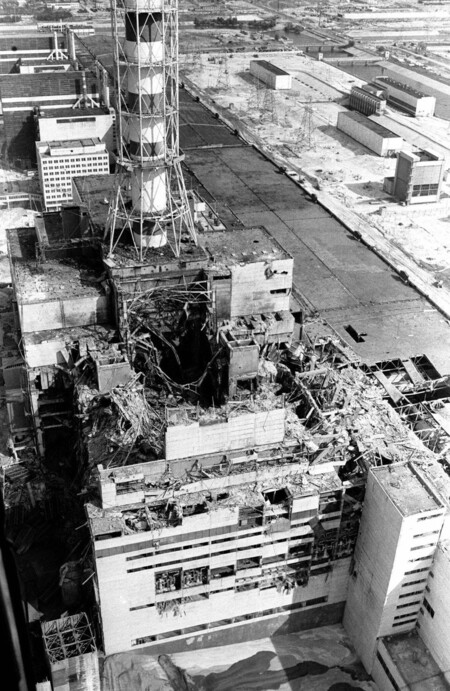
Aerial view of Reactor 4, several months after an explosion.
Chemical Risks. Beyond radiation, experts highlight that the real danger might lie in the dispersal of toxic chemicals. Facilities targeted, such as Natanz and Isfahan, store and manipulate uranium hexafluoride , a compound used in the enrichment process.
While stable at room temperature, its contact with water (including moisture in the air) can generate hydrofluoric gas , which is highly corrosive and deadly if inhaled. The IAEA has confirmed that in the attack on Natanz, compounds like uranium hexafluoride, uranyl fluoride, and even hydrofluoric gas might have been released, though contained within the compound’s boundaries. A parallel case is the 1986 incident at a conversion plant in Oklahoma, where the release of hexafluoride resulted in one death and contamination in the surroundings, demonstrating the potential scope of such accidents even in non-combat contexts.
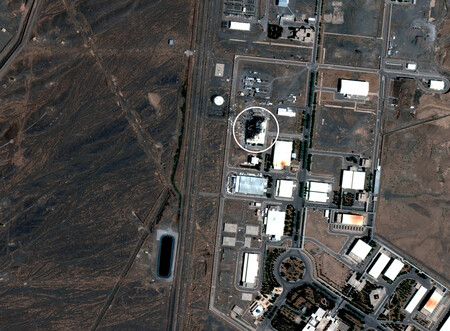
Natanz Nuclear Facilities
International Norms. Under international legal frameworks, armed attacks on nuclear facilities for peaceful purposes are prohibited. The IAEA has repeatedly stated that any such aggression violates the principles of the United Nations Charter , the agency’s own regulations, and international law. Both Israel and Iran are members of the IAEA, yet Israel is not a signatory of the Non-Proliferation Treaty.
The repercussions of the recent Russian attack and subsequent occupation of Ukraine’s Zaporizhzhia nuclear plant serve as a recent example of unprecedented actions in large-scale nuclear complexes. Israel justifies its military actions based on suspicions regarding Iran’s alleged nuclear weapon development, an accusation Tehran vehemently denies. Moreover, the IAEA recently declared that Iran violated its non-proliferation obligations for the first time in twenty years, adding to the already tense atmosphere.

Hypothetical Scenarios. Another looming question is what might occur if the Iranian regime suddenly collapses, leaving its enriched uranium arsenal and related materials unguarded. While aerial attacks may degrade critical infrastructure, they do not inevitably ensure the total elimination of nuclear capabilities if these are dispersed or hidden.
In this light, analysts from The War Zone have noted that U.S. special forces, particularly elite units like Delta Force and SEAL Team Six , have been training for years to intervene in nuclear emergency situations. The Special Operations Command (SOCOM) has been leading efforts to counter weapons of mass destruction (WMD), inheriting this responsibility from the Strategic Command. Experience gained from securing uncontained arsenals since the dissolution of the USSR serves as a model for these emerging scenarios.

Operational Threshold for Proliferation. According to the latest reports from the IAEA, Iran currently holds at least 400 kilograms of uranium enriched to 60%, a purity significantly higher than what is needed for civilian use (3-5%) but still beneath the 90% required for nuclear weaponization. Nevertheless, transitioning from 60% to 90% is a relatively short technical leap.
The IAEA considers that merely 92.5 kg of uranium at 60% can potentially yield a nuclear bomb after final enrichment. This reality is troubling, particularly given that the Iranian regime has restricted inspections at all its nuclear facilities. Iran has even taken “special measures” to conceal its nuclear materials, creating heightened uncertainties regarding the whereabouts of sensitive materials.
Operational Scenarios. The U.S. military has not only devised plans for surgical incursions but has also executed live drills simulating raids on hostile nuclear facilities. An illustrative example involved joint training in 2023 between the Ranger Regiment and the nuclear disablement team (NDT-1) in an old radiological facility, where they simulated an assault under enemy fire.
Other operations included securing the Bellefonte Nuclear Power Plant in Alabama and operational disarmament drills. Under the leadership of the 20th CBRNE Command , these units specialize in locating, exploiting, and neutralizing nuclear infrastructure while ensuring critical components are secured. Their mission centers on denying nuclear capabilities to adversaries in sensitive environments.
Responses to Mobile Threats. A sudden collapse of the Iranian regime or the movement of nuclear material outside facilities may necessitate dynamic operations to intercept shipments in transit. In such scenarios, analysts note that special forces would lead such missions due to their unique ability to infiltrate rapidly. Furthermore, there remains the risk of nuclear material or technology falling into the hands of groups like the Houthis in Yemen, a scenario already privately discussed among U.S. and Israeli officials.
While no concrete evidence has emerged regarding such a transfer, Iran’s history of exporting ballistic missiles, drones, and air defenses to regional allies highlights the potential for proliferation . Additionally, the threat extends beyond uranium, with Iran reportedly having parallel chemical and biological weapons programs. Following Gaddafi’s downfall, the U.S. had to safeguard chemical arsenals in Libya for three years, a past that might repeat itself in Iran if its regime collapses.
A Global Threat. In summary, the potential fallout from the current conflict between Israel and Iran goes well beyond immediate combat. Historical precedents demonstrate that losing control over nuclear materials—whether in small amounts or not—can result in global consequences, including dirty bombs, transfers to third parties, or geopolitical extortion.
Instability Ahead. On the other side, even in the absence of a nuclear catastrophe, risks remain palpable. As ongoing bombings target sensitive facilities, the delicate balance could be disrupted. Although the design and security protocols of these complexes reduce the likelihood of major disasters, any miscalculation, unexpected impact, or collateral damage could trigger unfolding consequences of unpredictable magnitude.
The focus of concern currently lies more with potential chemical contamination than radiological fallout. As the aerial offensive escalates and the list of targets expands, the danger is not limited to large-scale accidents but rather a series of cumulative micro-incidents that could lead to a public health or environmental crisis. The IAEA’s warnings emphasize the need to recognize an inflection point that is still avertable, yet increasingly imminent.
Image credits: U.S. Department of Energy, Wikimedia, Maxar, US ARMY.