
## Touching the Event Horizon: A New Frontier in Gravitational Wave Detection
On January 14, 2025, scientists detected the largest gravitational wave ever recorded. This detection marks a significant leap in our understanding of celestial phenomena, especially black holes. With advancements in technology over the past decade, we’ve seen an uptick in gravitational wave discoveries, and this particular event has sparked international interest in exploring the event horizon of black holes.
### Less Noise and Greater Sensitivity
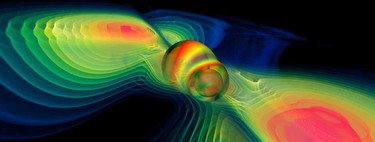
The evolution of detection techniques has been remarkable. Since the identification of the first gravitational wave, methods have improved significantly, enabling researchers to reduce background noise. As a result, scientists are now capable of detecting direct waves—gravitational radiation jets produced during the merger of two black holes. This significant event occurs precisely when the event horizons of the colliding black holes merge into a single one.
### Understanding Gravitational Waves and Event Horizons
To grasp the significance of this study, it’s crucial to understand what gravitational waves are. These waves are ripples in space-time caused by violent cosmic events, predominantly the collision of two black holes. The event horizon represents the point of no return; once an object crosses this threshold, it cannot escape the black hole’s gravitational grip, not even light.
When two black holes collide, the merger produces a single event horizon, leading to the genesis of gravitational waves. This is the moment scientists sought to capture.
### The Significance of GW250114
The gravitational wave known as GW250114 resulted from the collision of two relatively similar black holes—one with a mass of 33.6 solar masses and the other with 32.2 solar masses. Together, they formed a new black hole weighing 62.7 solar masses. The difference in mass is attributed to the energy released during the collision, manifesting as intense gravitational waves.
### The Mystery of the “During” Phase
Traditionally, scientists have been able to study black hole mergers before and after the collision, analyzing the vibrations leading up to and following the event. However, the mystery lies in the “during” phase, where direct waves provide a unique perspective on the merger process. By identifying these direct waves, researchers can extract valuable information about the newly formed event horizon, including metrics like rotation frequency and surface gravity, which are usually elusive.
### Testing Einstein’s Theories
For decades, scientists have been probing Einstein’s Theory of General Relativity to see if it holds true in all circumstances. The capability to measure these direct waves may pave the way for verifying if black hole mergers conform to Einstein’s predictions. This presents an exciting opportunity to further understand the laws of physics that dictate our universe.
However, more work is needed to determine whether these direct waves can be recognized alongside other gravitational waves, and whether the data obtained align with past measurements.
### Conclusion
The detection of GW250114 serves as a pivotal moment in understanding black holes and their event horizons. Although this marks just the beginning of an intricate exploration, it opens a promising avenue in unraveling the mysteries surrounding these cosmic giants.
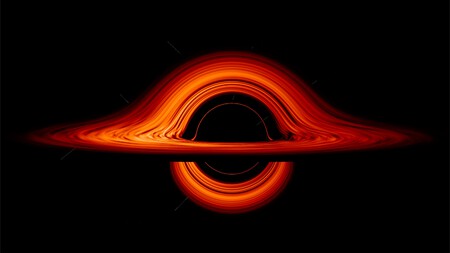
The event horizon of a black hole remains a great unknown in many ways