
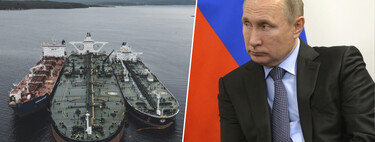
From the 47th floor of his Singapore apartment building, Remy Osman, a British expat working in the beverage industry, has a front-row seat to one of the world’s biggest geopolitical clashes. Armed with binoculars, a wide-angle camera, and live tracking applications, Osman observes as a 333-meter-long supertanker meanders along one of the busiest shipping routes on the planet.
The Shadow Fleet
The scene is rife with irony. According to the Financial Times, the cargo of that ship has nearly doubled in value since it set sail just weeks prior, coinciding with Brent crude oil prices soaring to $120 per barrel amid tensions between the United States, Israel, and Iran. From his vantage point, Osman hunts for vessels of the so-called “shadow fleet,” sanctioned oil tankers operating beyond the law yet in plain sight.
The supertanker that piqued Osman’s interest is the Huge, an 18-year-old oil tanker monitored by the U.S. Office of Foreign Assets Control (OFAC). It is Iranian-flagged and has been under scrutiny since 2018.
Patterns of Evasion
Despite the blockade of the Strait of Hormuz commencing in February, the Huge is among the few large crude oil carriers that successfully ventured out. Osman has identified a distinct pattern: Iranian oil tankers appear burdened as they sail east, indicating they’re heavily loaded, then return in the opposite direction lighter and considerably higher in the water.
The audacity of these vessels is remarkable in the current crisis. Ships that once operated in secrecy now boldly display their names and flags, signaling their intent to navigate these waters freely. As Osman shares with the Financial Times, this blatant defiance has allowed nearly two-thirds of the NITC fleet to start transmitting accurate data via their Automatic Identification Systems after years of obfuscation.
Tehran’s Economic Lifeline
The ramifications of this ghost fleet are colossal. While the world grapples with “the largest supply interruption in history” created by the closure of the Strait of Hormuz, Iran continues to export crude oil, exceeding 2 million barrels per day. The majority of these barrels are directed towards China, which absorbs around 90% of Iran’s oil exports. Reports indicate that the “Iran-China” route leads in clandestine operations, moving over 1.6 million barrels daily.
As Iran profits, the global economy trembles. Approximately 20 million barrels a day have been stripped from formal markets due to the blockade, making oil at $200 per barrel a serious concern. The shadow fleet is estimated to comprise around 1,100 vessels, amounting to 17-18% of all liquid cargo tankers globally, according to Fortune.
Legal Loopholes and Evasive Maneuvers
The mechanisms Iran employs to outmaneuver Western powers are intricate. Rather than sailing directly from Iran to China, these vessels engage in ship-to-ship transfers in less regulated waters, like the Eastern Outer Port Limits in Malaysia. Satellite imagery has confirmed the presence of about 60 vessels anchored in this area, operating under minimal oversight.
These ships take advantage of legal loopholes in the maritime system, which is largely based on voluntary compliance. Techniques for evasion include turning off radio transponders, spoofing locations, and altering their identities by scratching off registration numbers. Additionally, many vessels fly “flags of convenience” from countries like Panama, Cameroon, or Sierra Leone.
Challenges in Enforcement
Efforts to curb these illicit operations have proven frustrating. Malaysian authorities recently seized about $130 million worth of crude oil from two suspicious tankers, but both ships were released the very next day after paying a mere $75,000 bail. Osman was quick to observe one of them, the Celebrate, once again traversing the waters fully loaded.
Conclusion: Navigating in Shadows
While the ongoing conflict has injected complications into operations, the shadow fleet remains resilient and adaptive. Notably, legal entities like Saudi Arabia find themselves scrambling to divert oil through alternative routes, emphasizing the desperation among sanctioned players.
The emergence of a dark fleet isn’t indicative of a disintegrating maritime system; rather, it highlights its inherent voluntary nature. As Remy Osman gazes out from his apartment, he embodies the duality of contemporary oil politics: while the formal economy seeks alternative routes, the illicit trade persists in the shadows, navigating under the very noses of global powers.