
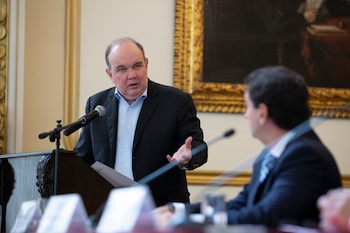
The Metropolitan Municipality of Lima (MML) , led by Mayor Rafael López Aliaga , announced on Wednesday its decision to suspend participation in a technical table called by the Ministry of Transportation (MTC) . This decision comes after the municipal authorities recognized that the much-anticipated Lima-Chosica train project will not be realized in the foreseeable future. The primary reason cited was a “ lack of commitment ” from the ministry, sparking considerable discussions within transportation circles.
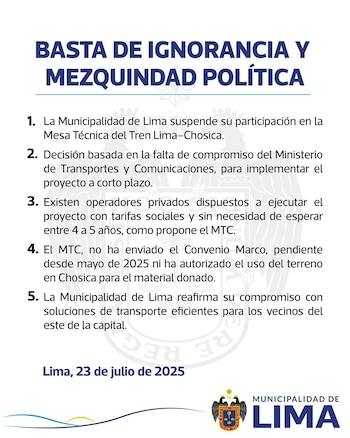
In a statement released on their X account, formerly known as Twitter, the commune expressed, “There are private operators willing to execute the project with social rates , and no need to wait for four to five years , as proposed by the MTC.” This announcement emphasizes the urgency and readiness of private entities to take on the project, further highlighting the frustrations with government delays.
Furthermore, MML lambasted the MTC for not sending the framework agreement that has been pending since May 2025. The delay also included the ministry’s failure to authorize the use of land in Chosica for the donated materials necessary for the project.
“The MML reaffirms its commitment to efficient transport solutions for the residents in the eastern part of the capital,” the statement concluded. This announcement was made on the same day that López Aliaga called for the resignation of César Sandoval , the head of the MTC.
Last week, during a ministerial meeting, a technical table was convened to dialogue over the train project. The meeting included representatives from various agencies such as the Urban Transportation Authority for Lima and Callao (ATU) , Sutran , and Ositran , among others. However, López Aliaga opted not to attend in person, delegating the responsibility to a municipal team.
In response, César Sandoval stated that the Lima-Chosica train would not commence operations in 2025 and suggested that neither a white march nor a demonstration would be feasible this year. This discord raises questions about the timeline and commitment to a project that is deemed crucial for many residents.
The ministry did present two alternatives regarding the train’s operation, proposing either a single route that necessitates comprehensive technical studies or a double track option that emphasizes safety and a highly technical approach . Both alternatives require the development of technical profiles and profiles that address operational, economic, and infrastructural concerns.
On the same occasion, López Aliaga formally requested President Dina Boluarte to reconsider Sandoval’s position, articulating his “most energetic rejection” of the latter’s claims about the project’s timeline. He further elaborated that this transportation service would directly benefit over two million inhabitants, particularly those in East Lima . Notably, the municipality had managed to secure the donation of 90 carriages and 19 locomotives in good condition, ideally to expedite the project’s implementation.
Nevertheless, the rail initiative has been viewed by various sectors as a political maneuver by López Aliaga, especially in light of the upcoming 2026 elections . The intertwining of politics and public infrastructure projects often raises skepticism about genuine commitment to public welfare versus electoral opportunism.