
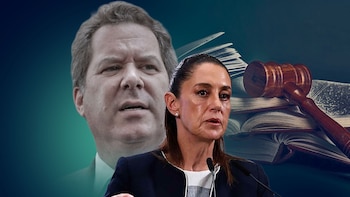
Ongoing U.S.-Mexico Tensions Over Drug Traffickers
In a recent development, Jeffrey Lichtman, the lawyer representing Ovidio Guzmán, has made headlines by openly criticizing Mexican President Claudia Sheinbaum. This ongoing feud revolves around the purported insistence from the Mexican government for information regarding the capture of Ismael “May” Zambada, a pivotal figure in the Sinaloa cartel.
During her Thursday morning press conference, President Sheinbaum was confronted by a journalist questioning whether Mexico would continue to seek details about Zambada’s arrest. The president responded, stating, “We keep insisting. It depends on the United States government to provide all the information, but we will continue to insist.” This statement underscores her commitment to maintaining a cooperative relationship with the United States.
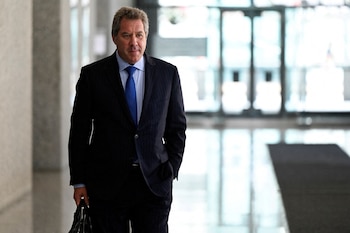
Following Sheinbaum’s assertions, Lichtman took to social media to voice his discontent. He pointed out a perceived double standard in the U.S. government’s actions, stating, “For 50 years, they had no interest in bringing it to justice in Mexico. Suddenly, now that it is no longer in Mexico, they can’t stop asking for their return.” This remark highlights a critical aspect of the contentious relationship between the U.S. and Mexico regarding drug enforcement and accountability.
Lichtman did not stop there. On July 11, he also publicly criticized President Sheinbaum for her remarks regarding Uvid Guzmán’s change of plea agreement with U.S. authorities. He noted a certain lack of coherence in U.S. policy, asserting that by labeling organizational leaders as “terrorists,” the U.S. is contradicting its own practices. Sheinbaum had seemingly suggested that the Mexican government should take an active role in extradition processes, which Lichtman found troubling. He characterized her comments as those of a “public relations” representative for Zambada’s organization.

The ongoing criticism and dialogue are not just a matter of personal grievances but reflect the broader implications of international drug trafficking. For example, Lichtman brought up the case of General Salvador Cienfuegos, who was arrested in the U.S. yet returned to Mexico where he was exonerated. Cienfuegos’ return to Mexico and the subsequent comments by President Andrés Manuel López Obrador that U.S. authorities fabricated evidence further complicate the trust between these nations.
As the dialogue continues, Lichtman asserts that Mexican authorities have been notably inactive in their efforts to capture “May” Zambada over the past four decades. He stated, “What I would tell President Sheinbaum is that perhaps she should look at her predecessors in the Presidency and try to find out why that happened,” highlighting longstanding issues in drug enforcement policy.
The unfolding tensions between the U.S. and Mexico in the realm of drug trafficking are far from resolved. As laws, treaties, and extradition requests evolve, it becomes increasingly clear that both nations are grappling with internal and external challenges in their fight against organized crime. This ongoing situation not only affects the drug lords and their legal representatives but also shapes the geopolitical landscape, raising questions about sovereignty, integrity, and the efficacy of law enforcement practices on both sides of the border.