
Tunja Celebrates 486 Years: A Nod to Its Rich History and Civic Pride
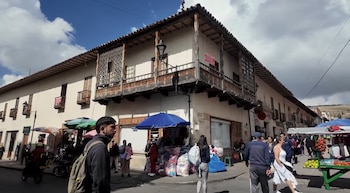
The Municipal Administration of Tunja has made a heartfelt invitation to residents, encouraging them to raise the flag of the city outside their homes, shops, and institutions. This meaningful gesture aims to foster local identity and entice community participation in the celebrations marking the 486th anniversary of Tunja’s foundation in Boyacá .
This call is especially directed at the educational community , public servants, and all residents, who are encouraged to participate in scheduled festivities across August 6, 7, and 8 .
Now you can follow us in
Facebook
and in our
WhatsApp Channel
The mayor of Tunja announced through Decree No. 0305 , dated July 15, 2025 , that there will be no workday on August 8 for public servants or classes in official schools. This decree complements the previously established Civic Day on August 6 , which commemorates the anniversary of the city’s founding. Additionally, August 7 marks the national observance of the Battle of Boyacá , recognized as a public holiday throughout the country according to Law 51 of 1983 .
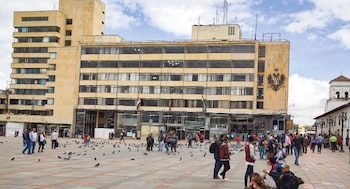
During these three celebratory days, the majority of government units will remain closed, bringing a halt to official duties and schooling. However, the Administration has allowed the Citizen Attention Unit to offer face-to-face services on August 8 from 7:00 am to 3:00 pm . Additionally, the 5th Police Inspection and the 5th Family Police Station , situated in Los Muiscas neighborhood , will be operational to address community needs.
To ensure ongoing essential services, the decree specifies that the workday suspension will not affect agencies responsible for public security, health, and transit, among others that require continuity or compliance with legal deadlines. Each agency must designate a minimum number of staff to handle emergencies and priority matters.
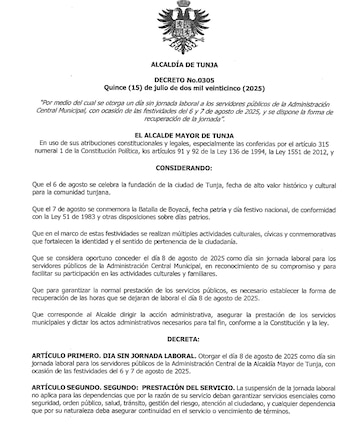
The town hall has also set forth mechanisms for receiving documents and requests on days when work is suspended. Citizens can utilize virtual channels and a limited face-to-face window for these transactions. Important services are still available, including managing requests through the electronic office of the mayorate or via the email [email protected] .
Historically, Boyacá has a vibrant past; notably, on August 6, 1819 , Juana Velasco de Gallo organized a banquet honoring the nation’s heroes of independence. She crowned Los Libertadores with laurel and coordinated efforts to prepare hundreds of white shirts for soldiers to wear in the historic Battle of Boyacá . This significant moment not only displayed logistical support but also cemented Tunja’s status in its political landscape.
This pivotal moment in history positioned the city as a center for the Liberating Army during its victory in the Battle of Boyacá . Over the dates of August 4-6 , Tunja witnessed a monumental moment where the Liberating Army made a triumphant entry, underlining its status as a historical capital in Colombia’s independence struggle.
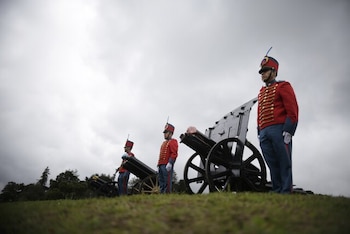
The foundation of Tunja dates back to August 6, 1539 , when Captain Gonzalo Suárez Rendón founded the city. Only two years later, on March 29, 1541 , Emperor Carlos V granted it city status through a Royal Decree , solidifying its prominence within the viceroyalty. Later, on December 1, 1564 , King Felipe II dubbed it ‘Very Noble and Very Loyal’, showcasing its significance within the colonial framework.
The city’s connection with independence is marked by Simón Bolívar’s arrival on November 22, 1814 . His profound bond with Tunja intensified following the victory at Boyacá , which earned the city the title ‘Heroic City’ during Bolívar’s journey to Angostura in September 1819 .
Bolívar was welcomed in the home of Diego Gómez de Polanco and José María Tejada , where the Palacio de la Torre , now the Boyacá Governorate , stands. Just days later, on September 29 , Bolívar referred to Tunja as the ‘Freedom Workshop’ in official documents, a testament to the close relationship he shared with the city, furthering its legacy as a cornerstone of the independence movement.
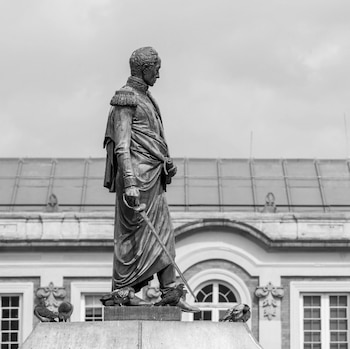
Due to its capital status in Boyacá, Tunja serves as a cultural and religious hub for various historical events. Some of the most notable celebrations include Holy Week , the Boyacense Aguinaldo , and the Virgen del Milagro Party . These events not only highlight the city’s cultural heritage but also reinforce its identity in the collective consciousness of Colombia .
Over the years, Tunja has amassed numerous titles and distinctions that underline its significance in national history, from being labeled ‘Very noble and very loyal’ to earning the titles of ‘Heroic City’ and ‘Freedom Workshop’. These moments, melded with its contributions to independence and cultural richness, position the city as a symbol of resistance , tradition , and transformation in Colombia.