
When you think of Steve Jobs as a billionaire, the most logical thing is to link that richness with Apple . However, what really catapulted him to that category of millonario was not the iPhone , the Mac , or the iPod . It was a small animation company called Pixar . Curiously enough, Pixar only existed as an independent company because George Lucas divorced his wife. The flutter of a butterfly, in the animation version.
George Lucas and His Divorce
In the late 70s, George Lucas was already one of Hollywood’s most successful directors. In full production of Star Wars , Lucas had founded Industrial Light & Magic (ILM), the studio known for its groundbreaking special effects innovations applied in his productions. In 1980, Lucas hired two computer experts: Ed Catmull and Alvy Ray Smith . Together they founded the computer graphics division within ILM, developing pioneering tools in CGI (Computer-Generated Imagery).
Later, John Lasseter joined the team—a young animator expelled from Disney for promoting digital animation too soon. Among the three engineers, the groundwork for what would later become Pixar was laid down. However, they were merely a small technical division within the studio back then.
<img alt="What was from Next, the company founded by Steve Jobs by leaving Apple and ended up being his salvation" width="375" height="142" src="https://i.blogs.es/6810a5/steve-jobs-next-2/375_142.jpeg"/>Meanwhile, George Lucas’s personal life was in disarray. His marriage to Marcia Lucas —who won an Oscar for her work on Star Wars —collapsed, leading to a divorce in 1983. This complex divorce process forced Lucas to part with $50 million, which resulted in the need to sell assets.
To minimize the impact on his production studio, Lucas chose to sell off departments, including the computer graphics division where Catmull, Smith, and Lasseter worked.
<img alt="Steve Jobs wanted to hire "Professional managers" for Apple: it was a disaster because they only knew how to manage, not lead" width="375" height="142" src="https://i.blogs.es/8c3189/gestores-profesionales/375_142.jpeg"/>Steve Jobs Enters the Scene
In 1985, Steve Jobs had been fired from Apple , the company he co-founded, and was on the lookout for new ventures. When he found out that George Lucas was interested in selling his computer division, he saw a golden opportunity.
Initially, Lucas asked for $30 million for the department. Jobs negotiated down to approximately $5 million , which led Lucas to reject the offer as too low. Even Disney made an offer, but it was even less.
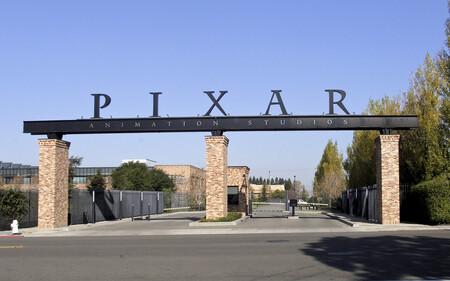
Finally, Steve Jobs made yet another offer for the CGI division of Lucasfilm , this time proposing a $10 million investment: $5 million for the technology developed and an additional $5 million to capitalize the new company. Thus, Pixar was born, consisting of a small team of about 40 people , including Catmull, Smith, and Lasseter.
</div>Toy Story Changed the Game
For almost a decade, Pixar struggled to produce films. Instead, the company sold hardware and software specializing in graphics and computer-generated effects, like the Pixar Image Computer , which targeted niche markets in the medical and graphic industries. Unfortunately, this focus left Pixar unprofitable, pushing Jobs to the brink of closing the company multiple times.
Salvation came through an alliance with Disney. Pixar agreed to produce three fully animated films, the first of which was Toy Story (1995). This groundbreaking film not only revolutionized the animation industry but also grossed $360 million worldwide, serving as a critical and financial success.
To capitalize on this triumph, Pixar’s stock soared to $39 on the first day of trading, instantly making Steve Jobs a billionaire. It marked his first significant business victory after his exit from Apple.
Thanks to Pixar’s monumental success, Jobs regained his reputation as a technological visionary, providing the confidence and clout needed to return as CEO of Apple by 1997. Yet, his journey with Pixar was far from over.
For years, Pixar operated independently, although its films were distributed under Disney’s marketing umbrella, producing hits like Finding Nemo and Cars .
In 2006, Disney acquired Pixar for $7.4 billion in stock, providing Jobs with 138 million shares , or 7% of Disney. This deal made him the largest private shareholder in Disney and earned him a seat on its board of directors. That 7% of shares is now valued at approximately $15.57 billion —a remarkable return on his initial $10 million investment.
In essence, Steve Jobs’s venture into Pixar not only reshaped the animation industry but also played a critical role in his narrative of resilience and success after being ousted from Apple. It served as both a creative and financial cornerstone in his remarkable career.
Image | Flickr (David Geller), Wikimedia Commons (Achanhk, Coolcaesar)