
Judge Dismisses Clean Hands Complaint on Police Handling of Protests
Overview of the Vuelta Ciclista a España Incident
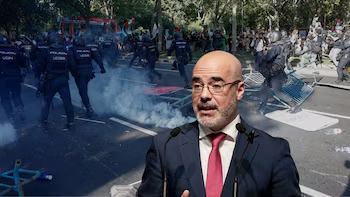
During the final stage of the Vuelta Ciclista a España in Madrid, large pro-Palestinian protests erupted against the participation of the Israel Premier Tech cycling team. Protesters gathered in significant numbers, which resulted in a police intervention to manage the situation. By the end of the day, the fallout included twenty-five injured officers and the detention of two protesters, raising questions about police tactics and operational efficacy.
Police Management Under Scrutiny
In light of these events, the union Manos Limpias filed a complaint against the Government delegate in Madrid, Francisco Martín. They attributed potential legal violations to his management that included recklessness, public disorder, and disobedience to authority. The crux of their argument was that police actions were dictated by a desire to maintain a favorable public image rather than to effectively manage the protests.
The complaint highlighted allegations from police unions that the officers deployed lacked clear instructions and proper authorization to manage violent incidents. Testimonies indicated that law enforcement’s operational capacity was severely restricted, likening their approach to being ‘with hands tied’ during critical moments of tension.
Judicial Response
Recently, the head of the Court of Instruction 45 in Madrid, Judge Luisa María Prieto, announced that she was dismissing the complaint from Manos Limpias. According to the court’s statement, there was no basis to admit the complaint for processing, as the circumstances described did not constitute a criminal offense.
The judge indicated that the complaint merely reflected external dissatisfaction with police directives and noted that claims of this nature should be resolved outside of the criminal justice system. Furthermore, the assertion that Francisco Martín could be held liable for injuries sustained by officers during the protest was deemed unfounded, as the events were perpetrated by others and not a result of intentional conduct on his part.
Legal Implications
In her ruling, Judge Prieto emphasized that serious crimes like public disorder or disobedience to authority cannot be committed through mere recklessness. Criminal intent, or fraud, must be present for such allegations to hold water, which was not evident according to the facts put forth by Manos Limpias.
Thus, the judge’s resolution underscores the importance of distinguishing between administrative oversight and criminal liability. The court’s decision leaves open the avenue for examining police management practices administratively but absolves the Government delegate from any criminal repercussions related to the incident.
Conclusion
The incident during the Vuelta Ciclista a España has brought forth crucial debates around the management of public protests and police operations in tense environments. The dismissal of the complaint against Francisco Martín denotes a significant judicial stance on the boundaries of criminal responsibility in instances of civil unrest, redirecting accountability from law enforcement leadership to the administrative realm. This development will likely influence future strategies for managing large-scale public demonstrations in Madrid and beyond.