
Unveiling the Birth of Stars
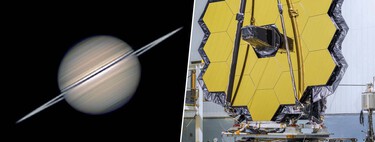
An international team of scientists has used both the Hubble Space Telescope and the James Webb Space Telescope to study star-forming clusters. This research has provided valuable insights into galaxy formation. While each telescope has its strengths, their combined capabilities have unlocked critical understanding.
Two Giants of Space
Strengths of Hubble
The Hubble Space Telescope has long been an essential tool for astronomers, capturing high-resolution images and reaching distant celestial phenomena. However, its effectiveness diminishes when it encounters thick clouds of gas, which block the view of emerging stars.
The Power of James Webb
James Webb, on the other hand, specializes in infrared radiation detection. This capability allows it to penetrate the gaseous veil that often obscures newborn stars. By analyzing 9,000 star clusters in four nearby galaxies, James Webb has opened avenues for deeper exploration.
From Cloud to Star
Stars originate from star clusters formed by the collapse of gas clouds under intense pressure and gravity. This process unfolds in three key stages: the initial gas cloud, the subsequent star cluster, and finally, the individual stars coming to life.
Understanding Stellar Feedback
Two Outcomes
Stars also play a pivotal role in the star formation process through a phenomenon known as stellar feedback. There are two main outcomes:
Supernova Explosions: Massive stars end their lives in violent supernova explosions, causing surrounding gas clouds to collapse and thus fostering the creation of new stars.
Radiative Influence: Younger stars emit significant ultraviolet radiation and stellar winds, dispersing nearby gas clouds and inhibiting further star formation.
Beyond the Veil: New Discoveries
James Webb’s ability to analyze light spectra has revealed that the most massive star clusters dissipate their gas clouds much more rapidly than their less massive counterparts. Specifically, massive clusters can clear surrounding gas in about 5 million years, while smaller clusters may take up to 8 million years.
What Does This Mean?
Implications for Galaxy Formation
This newfound knowledge is crucial for our understanding of galaxy formation. In regions with substantial star clusters, the quick dispersion of gas clouds means fewer new stars can form over time. Consequently, the spatial distribution of massive clusters directly influences the evolutionary trajectory of nearby galaxies.
Insights into Planetary Formation
Additionally, these revelations extend to the formation of planets. According to statements from the European Space Agency, the dynamics of gas removal within star clusters impact the protoplanetary disks—regions around stars where planets begin to form.
The Connection Between Stars and Planets
The faster gas is blown away, the sooner protoplanetary disks face intense radiation from surrounding stars. This radiation makes it more difficult for these disks to attract gas and accumulate the dust necessary for planet formation.
Conclusion
The collaboration between the James Webb and Hubble telescopes has significantly advanced our understanding of the cosmos. It demonstrates how the birth of stars and the formation of galaxies are intricately linked, showcasing the complexity of astrophysical processes. As we delve deeper into these phenomena, each discovery paves the way for further exploration of our universe’s myriad mysteries.