
The Breakthrough of Synthetic Cells: Insights from CONICET Scientist Fabricio Ballarini
The Creation of SpudCell
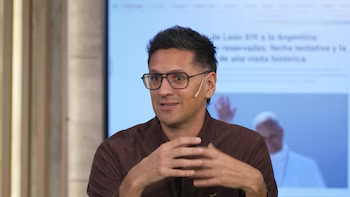
Scientists at the University of Minnesota have achieved a significant milestone in synthetic biology by creating a synthetic cell named SpudCell. This breakthrough discovery, able to feed, grow, and divide, has stirred excitement in the international scientific community. However, in a recent interview on Infobae in the Afternoon, CONICET biologist Fabricio Ballarini delved into the implications of this innovation and dispelled some misconceptions surrounding synthetic life.
What is a Synthetic Cell?
Ballarini explained that a synthetic cell is not simply a modified version of existing biological cells. Instead, it is a creation assembled with human ingenuity: “A synthetic cell is a cell that is built by humans… it puts all the elements in a small bottle and makes that cell have life.” This defining characteristic makes the creation of SpudCell historically notable, as it represents a tangible effort toward synthesizing life.
Limitations of SpudCell
While heralded as a scientific achievement, Ballarini was quick to clarify that SpudCell does not equate to true life. The cell is designed to duplicate itself and consume nutrients but cannot sustain itself for an extended period. Ballarini stated, “It doubles two or three times and dies,” emphasizing that we are not observing cells that can evolve or survive indefinitely.
The Philosophical Debate: What is Life?
The development of SpudCell reignites an age-old debate: what constitutes life? Ballarini presented this dilemma succinctly, suggesting that while we have some definitions of life based on observation, constructing something new could blur the lines between functional and dysfunctional life forms. “If we start building new things,” he posited, “maybe we can modify something called functional life or dysfunctional life.”
Scientific Implications and Ethical Considerations
SpudCell has only 25 times less genetic information than typical bacteria, housing only the essential components needed for duplication and nutrient absorption. Ballarini noted that the implications of this creation could span both remarkable advancements and potential risks. The synthetic cell could allow for more efficient energy production and drug development. However, he cautioned that although SpudCell cannot proliferate beyond a few cycles, like all technology, it carries risks if misapplied.
The Search for Eternal Life
The discussion further broadened to humanity’s quest for eternal life. Ballarini mentioned advancements in gene therapy aimed at “rejuvenating” aged cells, showcasing initial success in mice, with expectations of translatable results in humans soon. However, such advancements prompt significant ethical questions about the societal repercussions of extended lifespans and the potential monopolization of the pharmaceutical industry.
Conclusion: Challenges in Validation and Publication
Finally, Ballarini pointed to systemic issues within scientific publication, noting how expensive journals can negatively impact the dissemination of knowledge. He argued for a need to reassess the structures governing peer review and validation, emphasizing the balance between rigorous science and accessibility.
The breakthrough in synthetic cells highlights not only the possibilities afforded by modern science but also profound ethical and philosophical considerations. As researchers continue to explore the boundaries of life, the insights from experts like Ballarini remind us of the careful navigation required between innovation and responsibility.