
The Search for Axions: A Quest in Modern Physics
Launched into the realm of particle physics, researchers from around the globe are turning their attention to a mysterious and elusive particle known as the axion. This ultralight, invisible particle is believed to exist everywhere—both around us and in the farthest reaches of the Universe. The sheer number is mind-boggling; a single liter of space could contain several billion billion axions—a quantity that is ten thousand times less than the number of molecules found in the same volume of air.
The Role of Axions in the Universe
Despite its incredible rarefaction, the axion is believed to play a substantial role in the cosmic tapestry. Scale it up to the size of galaxies, and these particles might very well be the invisible glue that holds them together. Just as gravity binds stars in a galaxy, axions could be crucial in keeping the celestial bodies from drifting apart. Interestingly, this small, elusive component is thought to constitute a portion of dark matter. For decades, astronomers have been on the quest for dark matter, which is estimated to make up around 25% of the Universe.
The History of the Axion
The conceptual foundation of the axion was laid in 1977 by physicists at Stanford University—Roberto Peccei and Helen Quinn. They introduced this hypothetical particle as a solution to a persistent anomaly in particle physics. A few months later, esteemed physicist and future Nobel laureate Frank Wilczek coined the term "axion," likening it to a brand of detergent, which metaphorically captures its subtle yet significant impact.
Understanding the Anomaly
At its core, the axion was designed to address a fundamental inconsistency in the Standard Model of particle physics. While this model has proven exceptionally robust in explaining a wide array of particles and forces, it also has shortcomings. The axion provides a remedy to the glaring anomaly, effectively uniting various strands of theoretical physics into a coherent framework.
Characteristics of Axions
In the expansive family of hypothetical particles, axions belong to a sub-category known as WISPs (Weakly Interactive Slender Particles). They are characterized by their strikingly light mass, potentially even less than that of a neutrino, which is already considered extremely light. In fact, axions could weigh millions, or even billions, of times less than an electron.
Current Research and Experiments
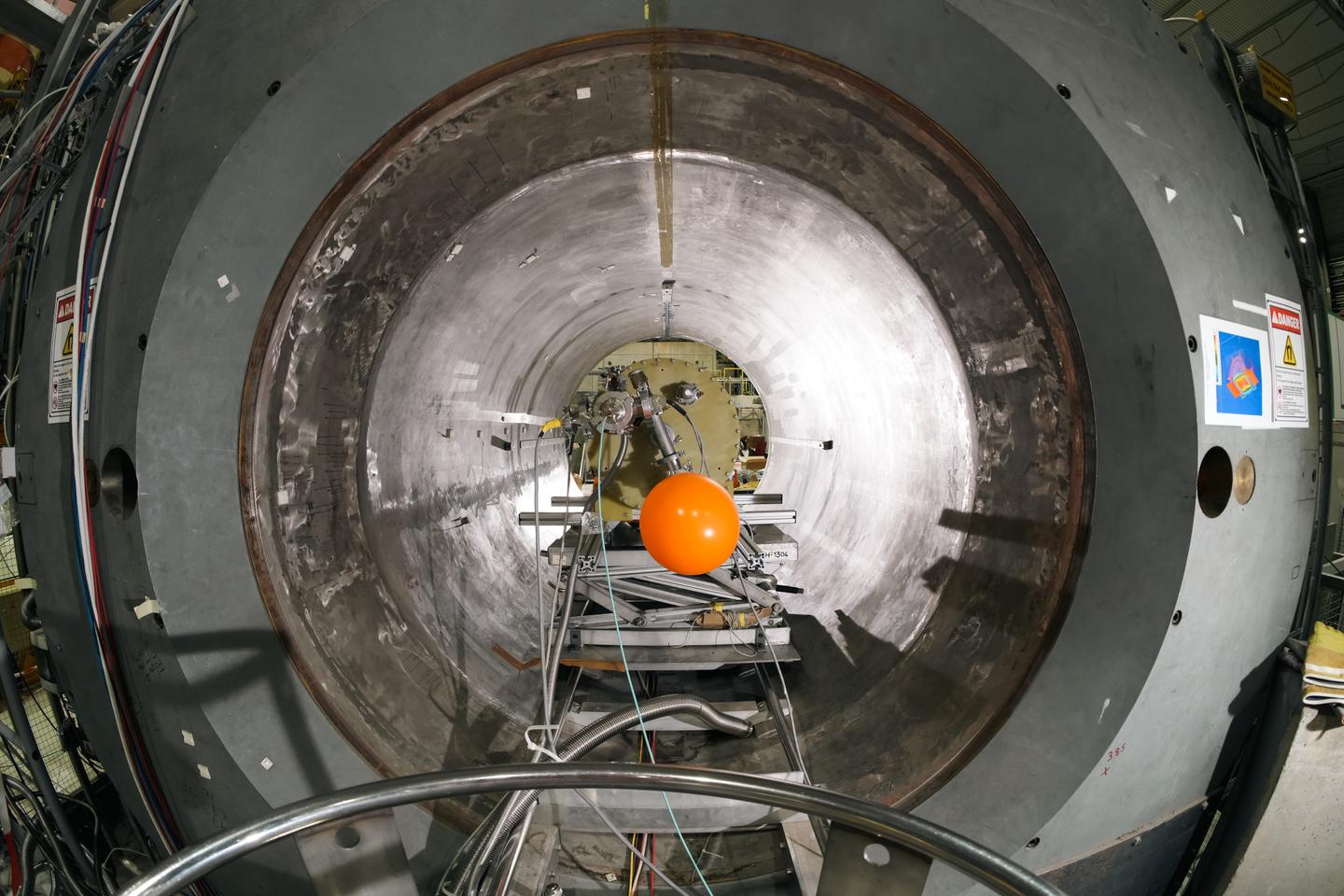
Researchers are currently engaged in an array of experiments designed to detect axions directly or indirectly. Facilities like the CERN laboratory and the CAST (CERN Axion Solar Telescope) experiment are at the forefront of this quest. They employ a variety of techniques, including strong magnetic fields and specialized detectors, in the hopes of capturing signals indicative of axion interactions.
The Importance of Axion Research
The quest for axions is not just about this single particle; rather, it embodies a larger endeavor in physics to uncover the mysteries of dark matter. Understanding axions could potentially open doors to new theories in physics, augmenting our understanding of gravity, spacetime, and the fundamental forces that govern our reality.
The Connection to Dark Matter
As one of the many candidates for dark matter, the discussion surrounding axions feeds directly into our efforts to understand the structure and evolution of the Universe. If proven to exist, axions could explain why galaxies hold their shape and how they form clumps in the cosmic web. This could revolutionize our grasp of cosmology and lead to breakthrough discoveries about the mechanics of gravity.
The Implications for Particle Physics
When delving deeper into particle physics, the implications of discovering axions extend beyond the scope of dark matter. It is a potential key to solving longstanding enigmas that have puzzled physicists for years. Should we successfully detect axions, it would validate the theoretical frameworks laid out by Peccei and Quinn, and solidify our understanding of the Standard Model.
Closing Thoughts
The journey to uncover the elusive axion represents a fascinating intersection of theoretical physics and practical experimentation. As researchers continue to probe the depths of the Universe with advanced technologies, the possibility of unraveling the secrets held by axions not only promises to reshape our understanding of dark matter, but also aims to bridge gaps in our foundational theories of physics. This ongoing search is emblematic of humanity’s relentless curiosity and determination to understand the mysteries of our cosmos.