
Rare earths are neither earths nor are they rare. They comprise a set of 17 chemical elements that have become pivotal in geopolitics and are integral to various technological and energy sectors today. Understanding where these reserves are located is as crucial as knowing how to produce them. In this realm, one name stands out: China.
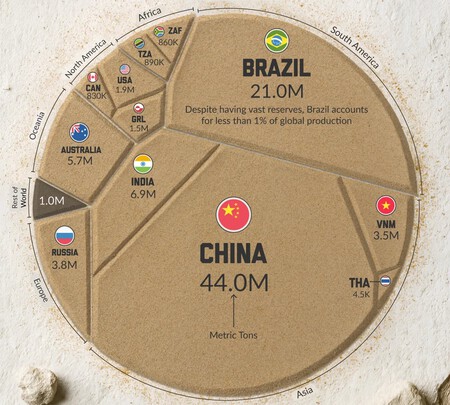
In the accompanying graph, the dominance of China in the rare earth reserve game becomes visually evident.
China’s Dominance
As visualized by Visual Capitalist using data from the United States Geological Survey (USGS), the data underscores that China possesses over twice the rare earth reserves compared to Brazil, which holds the second spot. With an estimated 44 million metric tons, China dwarfs Brazil’s 21 million metric tons and India’s 6.9 million metric tons.
Further down the list, other countries like Australia (5.7 million), Russia (3.8 million), Vietnam (3.5 million), the United States (1.9 million), and Greenland (1.5 million) fall significantly short. Collectively, the world’s rare earth reserves add up to about 92 million metric tons, meaning China controls approximately 50% of the total.
The Crucial Role of Rare Earths
Rare earth elements are embedded in nearly all aspects of modern technology. From subtle components in smartphones and magnets in headphones to the sophisticated technologies embedded in space telescopes and military systems, they are essential. Moreover, they are integral to the green energy transition, found in batteries for electric vehicles, accumulators, solar panels, and wind turbines.
However, possessing reserves is one thing; processing these materials is another. Rare earths do not exist in a pure form but are usually chemically bound to other minerals, necessitating an expensive and environmentally hazardous refining process. This process has, for years, been relegated to China due to its historically lax regulatory environment. This strategic oversight has now become a considerable vulnerability for the West.
Geopolitical Weaponization
China has capitalized on its position by threatening to cut off supplies, particularly during geopolitical tensions. The result? A significant disruption across industries reliant on these metals. For instance, car manufacturers like Suzuki faced production halts due to component shortages, a problem echoed across Europe and highlighted by major figures like Elon Musk.
Shifting Strategies
Recognizing this vulnerability, the West is now actively seeking alternative sources. Countries such as Spain, Norway, Greenland, and Japan are exploring new rare earth deposits. Efforts are underway to restart production capabilities in the West, despite the technical and environmental hurdles that remain.
Particularly in Spain, potential deposits have faced opposition from local communities concerned about the environmental impact of extraction. Projects like that at Torrenueva highlight this tension.
Recycling as a Sustainable Solution
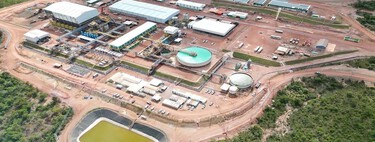
To mitigate reliance on China’s monopoly, there is an increasing focus on recycling rare earth elements. This strategy not only reduces the need for new mining but also helps alleviate environmental concerns related to extraction. Companies like Serra Verde, which currently have contracts to supply China, exemplify the challenges and opportunities ahead in reshaping the rare earth supply landscape.
As nations recognize the critical importance of rare earths, the landscape of global power dynamics is set to shift, pushing for greater autonomy and resource diversification in a tech-dependent world.