
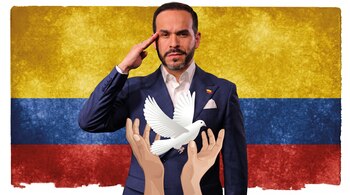
The Future of Peace Talks in Colombia: Abelardo de la Espriella’s Role
A New Leadership Era
On June 21, 2023, more than 23 million Colombians cast their votes, ushering in Abelardo de la Espriella as the new national leader, set to take office on August 7, 2026. His victory signifies a pivotal shift in Colombian politics, particularly regarding the peace initiatives that have previously shaped the nation’s landscape. The Colombian political atmosphere is now rife with uncertainty, especially concerning ongoing peace talks initiated under the previous administration.
Stance on Peace Negotiations
De la Espriella’s campaign was marked by a decisive declaration: he would not engage in negotiations with armed groups. This approach contrasts sharply with the more conciliatory tactics of his predecessor, Gustavo Petro. The implications of this stance are profound; supporters believe it could restore state authority and decrease the empowerment of illegal factions. Critics, however, warn that such a hardline approach may further entrench divisions within society.
Expert Insights: The Role of Legal Frameworks
In a discussion with Nicolás Mayorga, a professor at the University of La Sabana, it was highlighted that future peace dialogues hinge on De la Espriella’s willingness. The new president’s legal latitude stems from Law 418 of 1997, which grants the national government the discretionary power to engage in peace negotiations but does not obligate it to do so.
Mayorga emphasizes that the phrase “may carry out” in the law indicates it is a choice, not an obligation. The decision on whether to continue, halt, or revise negotiations is fundamentally in the hands of the new administration. This flexibility allows the president to pivot according to both political and security circumstances as perceived during his term.
Legal Ramifications and Upcoming Challenges
Despite the current negotiations with groups like the ELN and FARC dissidents potentially hanging by a thread, Mayorga suggests that an agreement might still be viable before De la Espriella takes office. Initiating talks or formal agreements now could offer a compromise that may mitigate the disruption expected with the new government’s policy shift.
This situation begs the question of whether previously established frameworks will hold up against De la Espriella’s legal interpretations. Should he choose not to pursue existing dialogues, such a decision would not require legislative action—simply a decision to reinterpret the current legal landscape.
Conclusion: Awaiting Direction
Ultimately, the pathway forward regarding peace negotiations in Colombia under Abelardo de la Espriella appears to be uncertain. His focus on law enforcement over negotiation invites debate about the best way to achieve peace in a historically conflict-ridden country. As Colombia stands at this crossroads, the commitment of its new leader will dictate whether the country continues its pursuit of reconciliation or shifts toward stricter measures against criminal organizations.
In light of these developments, all eyes will be on De la Espriella in the coming months as he formulates his administration’s strategies and priorities.