
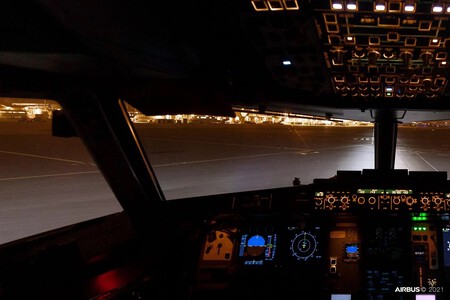
Landing a commercial airplane may appear as a simple task from the passenger’s perspective, but it is one of the most intricate and critical phases of flight. Pilots must coordinate navigation systems, weather conditions, and airport infrastructure with extreme precision. To enhance this process, Airbus is exploring the integration of artificial intelligence (AI) to facilitate smoother landings. Their innovative approach involves the use of cameras and artificial vision systems onboard the aircraft to analyze runway references in real-time during landing.
Introducing the Vision Landing Application
Airbus recently unveiled its Vision Landing Application at VivaTech 2026. Although this technology is still in its research phase, it represents a significant step toward enhancing aircraft autonomy. Conceptually similar to the technology used in autonomous ground vehicles, this application aims to provide a valuable layer of support to pilots rather than replacing them.
Understanding Autoland Evolution
While the capability for automatic landings in commercial airplanes is not a new development, it is vital to recognize that not all aircraft can utilize this feature universally. Autoland systems function under specific conditions, necessitating certified aircraft, appropriate infrastructure, and trained pilots. The technology Airbus is investigating strives to enhance the existing systems by introducing an internal guidance mechanism alongside human oversight.
Demonstrations and Technological Roadmap
The demonstration at VivaTech did not involve a live landing but showcased how computer vision can enhance automated procedures. This is part of a broader strategy that started with ■ATTOL■, a project initiated in 2018 aimed at developing autonomous taxiing, takeoff, and landing systems utilizing image recognition independently of conventional ground systems like ILS or GBAS. Following ATTOL, additional projects such as ■DragonFly■ and ■Auto’Mate■ advanced this agenda, focusing on pilot assistance and automated in-flight operations.
Optimize: A New Testing Vehicle
Another innovative project, known as ■Optimize■, symbolizes Airbus’s commitment to enhancing aviation safety and efficiency. This test vehicle mimics an A350 cabin and is designed to conduct tests in airport environments without requiring actual flights. It is equipped with advanced sensors, including cameras and LiDAR, slated to provide invaluable data for improving aviation capabilities.
Addressing Safety and Operational Challenges
The Vision Landing Application is particularly beneficial in two sensitive scenarios: at remote airfields where advanced infrastructure is lacking, and in environments where GNSS may be compromised. In these situations, the aircraft’s ability to visually interpret its surroundings can support operational safety, acting as a supplementary tool rather than a primary navigation system.
Embedded AI: A Revolutionary Step
Airbus refers to this approach as “embedded AI,” meaning it is integrated directly into the aircraft’s systems rather than relying on external servers. To achieve certification, Airbus must ensure that the technology complies with stringent safety regulations and operates efficiently across various contexts.
Aiding, Not Replacing Pilots
This advancement emphasizes the importance of maintaining a human element in aviation. Airbus’s goal is not to create pilotless aircraft, but rather to enhance the cockpit experience by providing better tools to crews, alleviating repetitive tasks and improving situational awareness.
Future Expectations
While the journey from conception to commercial implementation remains extensive, the Vision Landing Application signals an exciting trajectory for the aviation industry. Airbus must navigate a robust testing and certification process, ensuring the technology’s reliability across diverse landing scenarios. Although it won’t change the immediate landscape of aviation, it represents a clear move toward increasing autonomy in air travel.