

Mark Zuckerberg and His Controversial Superyacht: Navigating the Fine Line Between Luxury and Environmental Responsibility
The notion of a midlife crisis is often attributed to those in their 40s, a time when many people reassess life choices and ambitions. However, this phenomenon is not exclusive to the average man or woman; even billionaires like Mark Zuckerberg experience it, albeit in unique ways. Recently, Zuckerberg made headlines for his extravagant purchase— a luxury yacht valued at $300 million, sparking intense scrutiny regarding his environmental impact and the choices of the ultra-wealthy.
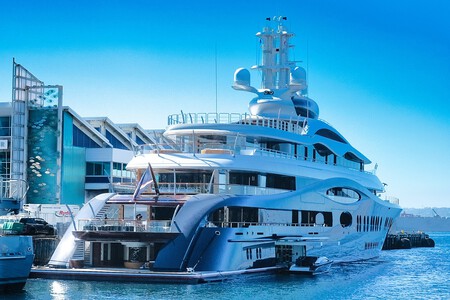
In a striking turn of events, Zuckerberg’s yacht has not only become a symbol of wealth but also an environmental conundrum . The vessel, interestingly dubbed “Launchpad,” has stirred criticism due to its substantial carbon footprint. For nearly nine months, the yacht has traversed various stunning locales—Tahiti, Norway, Mallorca, Greece, and Malta—covering approximately 20,000 kilometers while consuming around two million liters of diesel.
The Specifications of Launchpad: A Floating Luxury
The “Launchpad” is an impressive sight, measuring 119 meters in length—approximately longer than a football field—and 17 meters in width. It is equipped with four powerful engines that allow it to cruise at a speed of 44 km/h . The yacht’s enormous size includes 13 luxurious cabins and a capacity to accommodate 49 crew members with modern amenities, including a game room, an infinity pool , a gym, a spa, and even a helipad. However, the annual maintenance cost of roughly $30 million raises questions about the sustainability of such a lavish lifestyle.
Environmental Impact: A Hypocrisy Under Scrutiny
With such staggering figures comes environmental backlash . In total, it is estimated that the yacht has emitted over 5,300 tons of CO₂ into the atmosphere during its voyages. To put that into perspective, at cruising speed, the Launchpad generates emissions equivalent to 630 cars traveling in the same timeframe. This has triggered intense criticism from environmental activists, who highlight the glaring contradiction between Zuckerberg’s digital advocacy for a better world and his personal commitments that starkly undermine those values.
Privacy Concerns: Flouting Regulations
Adding fuel to the fire, Zuckerberg has also faced criticisms for employing AIS transponders to avoid detection while navigating near Mallorca, a move that violates international and Spanish maritime regulations. This desire for privacy is perceived by many as a blatant disregard for the laws that govern public waters.
Controversies Beyond the Yacht
The situation took an even more contentious turn when Zuckerberg attempted to utilize a helicopter for heli-skiing in Norway. In a region where strict environmental regulations demand permits for such activities, he found a loophole. By landing directly on his yacht, he effectively circumvented the need for permits, further enraging environmentalists and serving as a stark reminder of the privileges afforded to the ultra-rich.

The Broader Implications of Billionaire Privilege
As Zuckerberg’s yacht arrived at the French shipyard of Ciotat , it reignited discussions on the disparity between the ultra-wealthy and the general populace. While some may argue that maintaining luxury yachts generates jobs, one cannot ignore the broader conversation about climate change and economic inequality. Critics are increasingly questioning whether the ostentatious lifestyles of the rich contribute to a growing divide that is becoming increasingly untenable in our era of climate crisis.
In summary, as Mark Zuckerberg indulges in the luxury afforded by his wealth, he also faces scrutiny that extends beyond the yacht itself. The arrival of the Launchpad at the Ciotat shipyard symbolizes a broader narrative of inequality, privilege, and environmental irresponsibility. It poses challenging questions about the responsibilities of the super wealthy and the impacts of their choices on the global community. Ultimately, the contradictions found in the actions of billionaires serve as reminders of the need for balance between luxurious lifestyles and sustainable practices.