
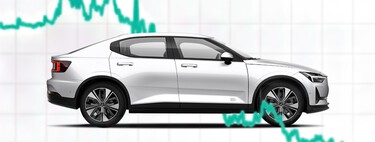
Polestar’s Groundbreaking Electric Vehicle Journey: A New Record
The journey of achieving 935.4 kilometers on a single charge with the Polestar 3 has set a remarkable benchmark in the electric vehicle (EV) sector. This record was achieved with a single-motor version of the conventional Polestar, showcasing the potential for long-distance travel without the need for a recharge. The achievement underlines just how far EV technology has come and the innovative strategies that can maximize battery efficiency.
The Secret to Success. The key technique behind this record-breaking distance was slow driving . The drivers maintained an average speed of below 40 km/h , completing the journey in approximately 22 hours and 57 minutes . While Polestar marketed an official range of 706 kilometers for this model, the achievement surpassed expectations by an astounding 32.5% . This not only raises questions about driving behavior but also highlights a growing trend in efficient driving practices.
Three Professional Drivers were tasked with this endeavor. Operating in the UK, the team comprised specialists in efficient driving whose focus was on conservation and optimization of energy use. The final energy consumption recorded was 12.1 kWh per 100 km , marking a significant 40% reduction in energy usage compared to typical driving methods.
Adventure Without Tricks. This remarkable feat was achieved without employing any special equipment ; the vehicle and wheels were standard, which means that anyone who purchases the Polestar 3 has similar capabilities—provided they drive efficiently. However, modifications in tire pressure and aerodynamics could significantly enhance these mileage figures.
Comparative Innovations. The competition in long-distance electric travel isn’t limited to Polestar. Chevrolet recently showcased an impressive modification of a WT Silverado truck that was fitted with a massive 205 kWh battery , in contrast to Polestar 3’s 111 kWh . By utilizing over-inflated tires and involving 40 drivers , they managed to travel 1,704 km on a single charge, following a similar strategy of slow driving with an average speed under 40 km/h . Despite running without air conditioning for a large part of the journey, their energy consumption was still striking at 12.7 kWh per 100 km .
A New Era of Long-Distance Travel. At the forefront of this electric journey is the Lucid Air Grand Touring , which set its own Guinness record by completing 1,205 kilometers on a single charge. With a battery capacity similar to that of Polestar 3, the vehicle benefited from a route that included substantial descents and efficient driving techniques. This achievement is a testament to how energy recuperation systems can further amplify the mileage of electric vehicles.
Battery Capacity vs. Energy Consumption
While the capacity of batteries undeniably plays a role in the distance electric cars can travel, the actual energy consumption of each model is a significant factor as well. Take the Mercedes Vision EQXX , for instance, which previously set a record by traversing 1,010 km without a recharge . With an average speed of 79.4 km/h , it showcased a superior consumption rate of only 7.4 kWh per 100 km . In comparison, a Tesla Model 3 rear-wheel drive consumes 13.2 kWh per 100 km , illustrating how aerodynamics and efficient driving can produce vastly different outcomes in terms of range.
Marketing Hype. While these records serve as commendable technical achievements, they also serve a marketing purpose. Companies aim to create buzz and shift consumer perceptions about electric vehicles. However, the practicality of such records remains debatable. Traveling at an average speed of 40 km/h for 23 hours may be a record-setting performance, but for the daily driver, it raises questions about real-world applicability and usability.
Like many extravagant records in the automotive world, such milestones—be it Polestar’s achievement or others—should be viewed through a critical lens. They serve as promotional benchmarks rather than practical scenarios for everyday driving. It is vital to appreciate these accomplishments while maintaining a realistic view of electric vehicles and their capabilities in typical usage patterns.
Image | Polestar
In summary, electric vehicles continue to push boundaries, presenting exciting innovations in efficiency and design. As these engineering feats unfold, they mark the evolution of transportation towards sustainability, raising awareness of what the future holds for personal mobility.