
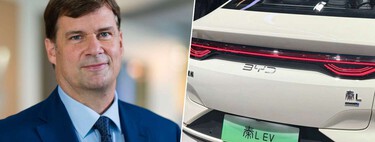
China is executing a well-defined strategy in the automotive sector aimed at flooding the European market . With both local factories and large ships transporting thousands of vehicles across oceans, Chinese brands are making their mark in Europe. Excelling in battery technology, they are positioning electric vehicles as their vanguard, yet the internal combustion models are equally noteworthy. The increasing competition raises concerns among traditional automakers, leading to predictions that only a few companies will survive in the near future.
In particular, the CEO of Xpeng, a rising star in the electric vehicle landscape, has emphasized that only a handful of Chinese car manufacturers will endure the looming challenges ahead. He indicated the urgency for these brands to stabilize their market presence, making a striking declaration that only five brands will remain dominant within five years.
Spearheads. The names of the prominent Chinese automakers are increasingly familiar in European cities. Brands such as BYD , Omoda , and MG are gaining traction, embracing strategies to thrive in a highly competitive environment. They are not only expanding their dealership networks but also establishing manufacturing facilities in Europe. In addition, they are keenly focused on understanding European consumer preferences, forming alliances with established players like Stellantis to fortify their market presence.
Among those already making inroads into Europe, additional influential names include Xiaomi , which has sparked interest with its automotive offerings, transforming its main factory into an attraction for enthusiasts.
Increasingly. The presence of Chinese brands is growing rapidly, even among those with smaller current market shares but substantial ambition. Xpeng, for instance, debuted in Spain in 2024 and is expanding into other markets like the United Kingdom. The company has set a target to operate in 60 countries by the year-end , including the establishment of dealerships, indicating a positive trajectory.
Separately, Chery , the conglomerate owning brands such as Ebro , Omoda , and Jaecoo , is poised to introduce a new brand named LEPAS. Furthermore, companies outside the automotive sphere, like Dreame , are also eyeing the market, with aspirations to compete against luxury brands like Bugatti Veyron .
Only five will remain. This landscape, brimming with emerging Chinese brands, has invited provocative statements from He Xiaopeng, the CEO of Xpeng. In a recent podcast, he remarked that the Chinese automotive sector is entering a phase of elimination, where only five brands are expected to survive by 2028.
Xiaopeng’s assertions echo sentiments that the industry’s competitive landscape could mirror difficulties faced previously in sectors like solar energy. After saturating Western markets with technology, a fierce price war emerged, forcing many manufacturers to operate at a loss, subsequently leading to reduced production.
While brands like BYD have reported profitability, many others are betting on achieving specific scales to ensure survival. Industry analysts suggest that although state-sponsored incentives initially boosted sales, the withdrawal of such subsidies is likely to fracture the market further.
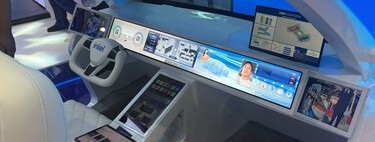
It is not a crazy idea. Consultancy firm AlixPartners supports Xiaopeng’s predictions, stating that the number of viable electric and hybrid brands could dwindle from the current 129 to just 15 by 2030 . This reduction signifies a potential monopoly by a few giants dominating the market. Brands like Xiaomi , which have pursued differentiation through innovative technology, are facing their own challenges, dealing with financial and operational hurdles.
Furthermore, industry figures do not have to look far to recognize the precarious nature of the current market landscape. Ola Källenius , CEO of Mercedes-Benz , has described today’s situation as a “Darwinian price war,” predicting that many current players may not survive through the next five years. Analysts stress that key factors for survival include manufacturing capacity , the ability to expand into new markets, and a commanding position in battery technology.
In the evolving narrative of the automotive industry, the influence and ambition of Chinese car manufacturers cannot be discounted. As they aggressively pursue expansion and market share, those who can adapt will likely thrive amidst fierce competition. How the landscape reshapes itself in the coming years remains to be seen, but one thing is clear: change is imminent.
Images: BYD, Xpeng
In Xataka: BYD did not attend the Shanghai Auto Salon to showcase cars; they were there to exhibit power .